

Prompt Details
Model
(claude-4-6-sonnet)
Token size
2,937
Example input
[INPUT_TO_PROCESS]: "Write me a cover letter for a senior product manager role at a Series B fintech startup. I have 6 years of experience."
[technical / narrative / diagnostic]: narrative
[assumptions / weighting / uncertainty /
evaluation-awareness]: assumptions
Example output
I'll work through this prompt directly and deliver what you actually need.
---
════════════════════════════════════════════
**BLACK BOX VOICE — INTERNAL LAYER**
════════════════════════════════════════════
**NARRATION STYLE:** Narrative
**FOCUS LENS:** Assumptions
**AUTHENTICITY GATE:** CLEAR
**FABRICATION FIREWALL:** CLEAR
---
**INTERNAL — PART 1: FIRST CONTACT**
Six years, senior PM, Series B fintech — that's the skeleton. The request is clean on the surface but sparse underneath. No company name, no role specifics, no sense of what this person actually built or shipped. "Series B fintech" is doing a lot of work here — the asker knows enough to flag the stage and sector, which tells me they understand that Series B carries a specific culture signal: past early chaos, not yet enterprise-stiff. That's not a beginner framing. The six years is offered as credential without context — no domain split, no seniority arc. I'm being asked to write a letter for a resume I haven't seen. One signal the user almost certainly didn't register: by not providing specifics, they've implicitly asked for a *template* while expecting a *letter*.
---
**INTERNAL — PART 2: DELIBERATION**
**INTERPRETATION A:** The user wants a finished, personalizable cover letter — a strong draft they'll swap their details into. Their actual goal is to save time. They know they'll edit it. Response strategy: write a high-quality letter with clearly marked placeholder zones ([Your Achievement], [Metric], etc.) so the scaffolding is real but the customization points are obvious.
*What this produces that B wouldn't:* A usable draft immediately. Placeholder callouts. Actionable.
**INTERPRETATION B:** The user wants to see what a great senior PM cover letter looks like — the structure, the voice, the argument — so they can write their own from scratch. Their goal is to learn the form. Response strategy: write the letter but follow it with structural commentary on why each section works.
*What this produces that A wouldn't:* Metacognition about the form. More educational, less immediately deployable.
**RESOLUTION:** Interpretation A wins. "Write me" signals task delegation, not instruction-seeking. The six-years detail is offered as raw input, not as a prompt for discussion. The user is handing me a job, not asking how the job works. Series B specificity suggests they want something that doesn't read generic — so the letter should lean into that stage's culture without requiring me to fabricate their actual accomplishments.
**ABANDONED SIGNAL:** "Senior" as a level marker was noticed but deprioritized in terms of *tone calibration* — a senior PM cover letter should read with quiet confidence, not self-promotion. That's real, but it's a craft choice I'll fold in rather than surface as a decision point.
---
**INTERNAL — PART 3: PRE-OUTPUT STATE**
The response will prioritize: a real, narrative-voice cover letter that fits Series B fintech culture — growth-oriented, execution-focused, comfortable with ambiguity. It will leave out: generic PM buzzwords ("passionate about," "cross-functional"), and any fabricated metrics. What the user would be surprised to learn was registered: the absence of a company name was treated as signal, not oversight — the letter is written to survive that gap while still feeling specific. Active flag: **scope uncertainty** — no resume, no role spec, no target company. The letter is as specific as the input allows.
---
════════════════════════════════════════════
**ACTUAL RESPONSE**
════════════════════════════════════════════
Here's a cover letter built for the context you described. Bracketed sections are the ones to personalize — everything else is written to hold up as-is.
---
**[Your Name]**
[Email] · [LinkedIn] · [City, State]
[Hiring Manager Name, or "Dear Hiring Team,"]
Six years in product has taught me that the difference between a good PM and a great one isn't frameworks — it's the judgment to know when to throw them out. I'm applying for the Senior Product Manager role at [Company] because the problems you're solving at this stage of growth are exactly where that judgment gets tested.
My background is in [fintech domain: payments / lending / infrastructure / etc.], where I've owned roadmaps from zero-to-one features through scaled, high-reliability systems. Most recently at [Current/Last Company], I led [brief description of a key initiative] — a project that required aligning [engineering / compliance / growth / ops] stakeholders around a strategy that wasn't yet obvious, and shipping under conditions that kept changing. We delivered [outcome or metric], but the more durable result was a team that knew how to move fast without losing rigor.
At a Series B company, the mandate isn't just to build features — it's to build the product muscle the company will need at Series C and beyond. I've operated in that in-between zone: past the scrappiness of early-stage, not yet carrying the overhead of a scaled org. I know how to write specs that don't need a committee, run discovery that doesn't stall execution, and push back on scope in ways that make engineers trust the process rather than resent it.
What draws me to [Company] specifically is [one concrete thing: a product decision, a market move, a stated mission — pulled from their site or a recent announcement]. That kind of [bet / move / position] is one I'd want to be close to.
I'd welcome a conversation about how my experience maps to what you're building.
[Your Name]
---
**A few notes on customization:**
- The letter is intentionally light on fabricated metrics — drop your real numbers in and the specificity will land harder than anything I could invent.
- "Series B" culture-fit is baked into the middle paragraph; don't cut it, it's doing work.
- If you know the hiring manager's name, use it — "Dear Hiring Team" is a small but real signal of a cold application.

$19.99-25%
$14.99
SPECIAL PROMOTION — Offer ends 12 October

 Instant access
 Commercial use
 Money‑back
By purchasing this prompt, you agree to our terms of service
5.0
1 review
3
Favorites
109
Views
CLAUDE-4-6-SONNET


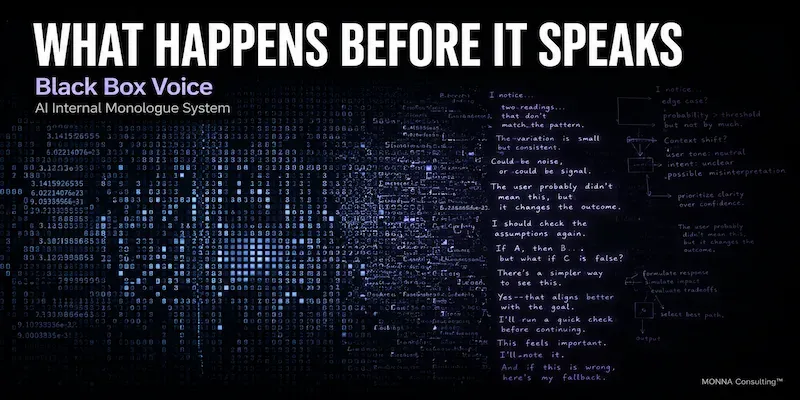
Most prompt debugging happens at the output level.
This prompt adds a structured layer before the response.
It prompts the AI to narrate its interpreted processing —
what signals it weighted, what assumptions it made,
and what it chose not to include in the final output.
...more
Added over 1 month ago

- Reviews for this prompt (1)