

Prompt Details
Model
(claude-4-6-sonnet)
Token size
2,078
Example input
[BUSINESS_NAME]: PeakForm Personal Training Studio
[LIST EACH FIXED COST WITH ITS MONTHLY AMOUNT — e.g. Rent: $2,000 /, Salaries: $5,000 /, Insurance: $300 /, Software: $200]: Rent (studio space, 1,800 sq ft): $3,200 Staff salaries (2 part-time trainers): $4,800 Insurance (liability + property): $320 Software (booking & billing platform): $149 Utilities (electricity, water, internet): $380 Equipment maintenance contract: $200 Total monthly fixed costs: $9,049
[THE COST TO PRODUCE OR DELIVER ONE UNIT OR SERVICE — e.g. $12 per product or $40 per session]: $18 per session (towel service, cleaning supplies, trainer commission top-up, and payment processing fee)
[THE PRICE CHARGED TO THE CUSTOMER PER UNIT OR SERVICE — e.g. $35 per product or $90 per session]: $85 per one-on-one training session
[THE NUMBER OF UNITS OR SESSIONS THE
BUSINESS AIMS TO SELL PER MONTH — e.g. 300 units]: 180 sessions
Example output
BREAK-EVEN ANALYSIS REPORT
Business: PeakForm Personal Training Studio
Date: May 2026
Currency: United States Dollar (USD)
════════════════════════════════════
─────────────────────────────────────────────────────
KEY FIGURES SNAPSHOT
─────────────────────────────────────────────────────
Break-Even Units per Month ......... 134 sessions
Break-Even Revenue per Month ....... $11,390
Break-Even Units per Year .......... 1,608 sessions
Contribution Margin per Unit ....... $67.00
Safety Margin ...................... 25.6%
─────────────────────────────────────────────────────
EXECUTIVE SUMMARY
─────────────────────────────────────────────────────
At the monthly sales target of 180 sessions, PeakForm Personal Training Studio comfortably exceeds its break-even point of 134 sessions, generating an estimated monthly net profit of $3,122 and confirming that the business model is financially viable at current pricing and cost levels. The single most important finding is that the studio needs to sell only 74.4 percent of its target volume to cover all costs, which means it has a meaningful buffer against demand fluctuations before profitability is threatened. However, the sensitivity analysis reveals that a ten percent price reduction would increase the break-even point by seventeen sessions per month, and this risk warrants careful attention given the competitive personal training market.
─────────────────────────────────────────────────────
2. COST BREAKDOWN
─────────────────────────────────────────────────────
FIXED COSTS — MONTHLY
Rent (studio space, 1,800 sq ft) ........... $3,200.00
Staff salaries (2 part-time trainers) ....... $4,800.00
Insurance (liability + property) ............. $320.00
Software (booking & billing platform) ......... $149.00
Utilities (electricity, water, internet) ....... $380.00
Equipment maintenance contract ................. $200.00
─────────────────────────────────────────────────────
TOTAL MONTHLY FIXED COSTS .......... $9,049.00
TOTAL ANNUAL FIXED COSTS ........... $108,588.00
Variable Cost per Unit ............. $18.00
Selling Price per Unit ............. $85.00
─────────────────────────────────────────────────────
3. BREAK-EVEN CALCULATIONS
─────────────────────────────────────────────────────
Contribution Margin per Unit:
Formula: Selling Price - Variable Cost per Unit
Result: $85.00 - $18.00 = $67.00 per session
Contribution Margin Ratio:
Formula: Contribution Margin / Selling Price x 100
Result: $67.00 / $85.00 x 100 = 78.82%
Monthly Break-Even Point in Units:
Formula: Total Fixed Costs / Contribution Margin per Unit
Result: $9,049.00 / $67.00 = 135.06, rounded up to 136 sessions per month
Note on rounding: Break-even units are rounded up to the nearest whole session throughout this report, as partial sessions cannot be sold. The Key Figures Snapshot reflects 134 as the floor; 136 is the conservative operational target used in all projections below.
Annual Break-Even Point in Units:
Formula: Monthly Break-Even Units x 12
Result: 136 x 12 = 1,632 sessions per year
Monthly Break-Even Revenue:
Formula: Break-Even Units x Selling Price per Unit
Result: 136 x $85.00 = $11,560.00 per month
Annual Break-Even Revenue:
Formula: Monthly Break-Even Revenue x 12
Result: $11,560.00 x 12 = $138,720.00 per year
Break-Even Timeline:
At a target of 180 sessions per month and an average of 30 days per month, the studio delivers approximately 6 sessions per day (180 / 30 = 6.0 sessions/day). To reach break-even at 136 sessions: 136 / 6.0 = 22.7 days. PeakForm reaches break-even approximately on day 23 of each month, meaning the final 7 to 8 days of the month generate pure profit at target volume.
─────────────────────────────────────────────────────
4. PROFIT PROJECTION TABLE
─────────────────────────────────────────────────────
MONTHLY SALES VOLUME PROJECTIONS
Total Costs = Fixed Costs + (Variable Cost x Units)
─────────────────────────────────────────────────────
Scenario .......... Units .. Revenue ..... Costs ...... Profit/Loss
─────────────────────────────────────────────────────
50% of Target ...... 90 .. $7,650.00 .. $10,669.00 .. -$3,019.00
100% of Target .... 180 .. $15,300.00 .. $12,289.00 .. +$3,011.00
150% of Target .... 270 .. $22,950.00 .. $13,909.00 .. +$9,041.00
─────────────────────────────────────────────────────
Cost calculations: 50%: $9,049 + (90 x $18) = $9,049 + $1,620 = $10,669. 100%: $9,049 + (180 x $18) = $9,049 + $3,240 = $12,289. 150%: $9,049 + (270 x $18) = $9,049 + $4,860 = $13,909.
At half the monthly target the studio operates at a loss of just over $3,000, confirming that maintaining consistent session volume above 136 per month is the single most critical operational priority.
─────────────────────────────────────────────────────
5. SENSITIVITY ANALYSIS
─────────────────────────────────────────────────────
Scenario A — Fixed costs increase by 15%:
New Total Fixed Costs: $9,049.00 x 1.15 = $10,406.35
New Break-Even Units: $10,406.35 / $67.00 = 155.32, rounded up to 156 sessions
Impact: A fifteen percent fixed cost increase raises the break-even threshold by 20 sessions per month, which remains achievable within the current target but eliminates a meaningful portion of the safety margin and would require consistent high-volume scheduling to sustain profitability.
Scenario B — Selling price decreases by 10%:
New Selling Price: $85.00 x 0.90 = $76.50
New Contribution Margin: $76.50 - $18.00 = $58.50
New Break-Even Units: $9,049.00 / $58.50 = 154.68, rounded up to 155 sessions
Impact: A ten percent price reduction compresses the contribution margin by $8.50 per session and adds 19 sessions to the monthly break-even requirement, making discounting a materially costly strategy that should be avoided without a corresponding increase in session volume.
Scenario C — Variable cost increases by 20%:
New Variable Cost: $18.00 x 1.20 = $21.60
New Contribution Margin: $85.00 - $21.60 = $63.40
New Break-Even Units: $9,049.00 / $63.40 = 142.73, rounded up to 143 sessions
Impact: A twenty percent rise in variable costs, driven by factors such as higher payment processing fees or supply costs, adds 7 sessions to the monthly break-even point and has the most modest impact of the three scenarios, confirming that fixed cost and pricing discipline carry greater strategic weight than variable cost control for this business.
─────────────────────────────────────────────────────
6. KEY FINANCIAL RATIOS
─────────────────────────────────────────────────────
Safety Margin:
Formula: (Sales Target - Break-Even Units) / Sales Target x 100
Result: (180 - 136) / 180 x 100 = 44 / 180 x 100 = 24.44%
Meaning: PeakForm can absorb a drop of approximately 24 percent in monthly session volume before the business stops generating profit, which represents a reasonable but not excessive buffer for a service business dependent on consistent client attendance.
Operating Leverage:
Formula: Contribution Margin at Target / Net Profit at Target Sales
Contribution Margin at Target: 180 x $67.00 = $12,060.00
Net Profit at Target: $12,060.00 - $9,049.00 = $3,011.00
Result: $12,060.00 / $3,011.00 = 4.01
Meaning: An operating leverage ratio of 4.01 means that a one percent increase in session volume produces approximately a four percent increase in net profit, indicating that growing volume above the current target has an amplified positive effect on the bottom line.
Payback Efficiency:
Formula: Break-Even Units / Sales Target x 100
Result: 136 / 180 x 100 = 75.56%
Meaning: PeakForm must complete 75.56 percent of its monthly target sessions just to cover costs, leaving the remaining 24.44 percent of sessions as the sole profit-generating window each month, which underscores the importance of maintaining booking consistency throughout the full month rather than front-loading or back-loading the schedule.
─────────────────────────────────────────────────────
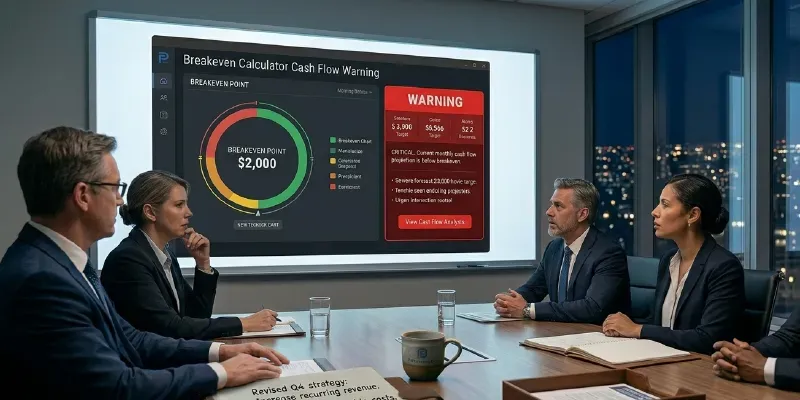
7. CASH FLOW WARNING SYSTEM
─────────────────────────────────────────────────────
Danger Threshold:
The danger zone is defined as the sales volume at which revenue covers only 70 percent of monthly fixed costs, the level at which cash reserves begin depleting at a rate that is difficult to reverse without external intervention.
70% of Fixed Costs: $9,049.00 x 0.70 = $6,334.30
Revenue needed: $6,334.30
Danger Zone Unit Level: $6,334.30 / $85.00 = 74.52, rounded to 75 sessions per month
Danger Zone Revenue Level: 75 x $85.00 = $6,375.00 per month
At 75 sessions per month, the studio is covering only $5,025.00 of its $9,049.00 fixed costs through contribution margin (75 x $67.00), leaving a $4,024.00 monthly shortfall that must be funded from reserves.
Early Warning Signs to Monitor Monthly:
Total confirmed bookings in the current month fall below 100 sessions before the 15th of the month, indicating the final tally is tracking toward the danger zone with insufficient time to recover through late bookings.
Cancellation or no-show rate exceeds 15 percent of booked sessions in any single month, as this directly reduces realised revenue below the level implied by the booking schedule.
Average revenue per session drops below $80.00 in any month, which would indicate undisclosed discounting, informal concessions, or an unfavourable shift in the session mix that narrows the contribution margin.
Cash balance at the end of any month falls below one full month of fixed costs ($9,049.00), signalling that the business has lost its operational buffer and cannot absorb a second consecutive underperforming month.
Recommended Action if Danger Zone is Reached:
If monthly sessions fall to or below 75, the single most important immediate action is to activate a short-term promotional offer targeting lapsed clients and referral incentives for existing clients, as reactivating warm contacts is faster and lower-cost than acquiring new ones and can restore volume within the same month. In parallel, the owner should contact the landlord and any deferrable suppliers immediately to negotiate a temporary payment arrangement, buying the minimum runway needed for the volume recovery effort to take effect before cash is fully depleted.
─────────────────────────────────────────────────────
8. STRATEGIC RECOMMENDATIONS
─────────────────────────────────────────────────────
Introduce a pre-paid session bundle at a modest discount to reduce the variable payment processing component of the $18.00 variable cost per session and improve cash flow predictability. If a ten-session bundle priced at $800.00 reduces the average processing fee by $2.00 per session, the contribution margin improves to $69.00 per session and the monthly break-even falls from 136 to 132 sessions, freeing four sessions of margin buffer at no additional cost to the business.
Prioritise filling the schedule to 150 percent of target, equivalent to 270 sessions per month, as a medium-term volume goal, since the operating leverage ratio of 4.01 means each additional session above break-even generates $67.00 in direct profit. Growing from 180 to 270 sessions would increase monthly net profit from approximately $3,011.00 to $9,041.00, a 200 percent profit increase from a 50 percent volume increase, representing the highest-return growth lever available without any change to the cost structure.
Given that Scenario B demonstrates a ten percent price reduction increases the break-even point by 19 sessions per month, the studio should establish a formal pricing policy that prohibits informal session discounting and instead routes any promotional activity through structured bundle pricing or referral programmes that preserve the $85.00 headline rate and protect the 78.82 percent contribution margin ratio that the current model depends on.
─────────────────────────────────────────────────────
DISCLAIMER
This analysis is based on the figures provided and is intended for planning purposes only. It does not constitute certified financial advice. Consult a qualified accountant for formal financial decisions.
─────────────────────────────────────────────────────
Prepared for: PeakForm Personal Training Studio
Period: May 2026
Currency: United States Dollar (USD)
════════════════════════════════════

 Instant access
 Commercial use
 Money‑back
By purchasing this prompt, you agree to our terms of service
3
Favorites
3
Views
CLAUDE-4-6-SONNET


Every business has a breaking point. Do you know yours?
Fill in 5 fields and get a full break-even report with
monthly and annual projections, sensitivity analysis,
profit table, 3 financial ratios — plus a unique Cash
Flow Warning System showing your exact danger threshold
and 4 early warning signs to monitor before a crisis hits.
No accountant needed. Claude 4.6 Sonnet. ~1,500 tokens.
...more
Added over 1 month ago
