

Prompt Details
Model
(claude-4-6-sonnet)
Token size
2,479
Example input
[SOURCE_CONTENT]: Look, the biggest headache right now is Perplexity’s citation volatility. We’ve been tracking our brand mentions across 50 high-intent keywords, and our visibility dropped 40% overnight after their latest core index refresh. It’s an absolute nightmare (Intensity: 5/5 if you ask me) because the client thinks we did something wrong. Our current GEO audit sprint looks like this: First, we scrape the Perplexity and Gemini responses for our target keyword set using a custom Python script. Second, we parse the unstructured text to map out the 'citation graph'—basically identifying which authoritative domains the LLM is pulling from. Third, we map our own content against those source entities. The frustrating part is that standard SEO tools like Semrush are completely useless here; you have to manually reverse-engineer the LLM's grounding dataset. I’ve been running GEO experiments for enterprise SaaS clients since early 2024, and anyone telling you there is a standardized 'GEO optimization checklist' is lying. We are still guessing at the exact weights of citation retrieval factors, but focusing on high-density information gain chunks seems to move the needle
[SOURCE_TYPE]: FORUM
Example output
## Source Metadata
URL/title: not provided
Date: not stated
Source type: FORUM (as specified)
Speaker/author credentials: "I've been running GEO experiments for enterprise SaaS clients since early 2024"
## Pain Points (ranked by emotional intensity 1-5)
1. Perplexity citation volatility causing sudden visibility drops — intensity: 5/5 — evidence: "the biggest headache right now is Perplexity's citation volatility... It's an absolute nightmare (Intensity: 5/5 if you ask me)"
2. Client blame for visibility drop despite no agency error — intensity: not explicitly ranked by source — evidence: "the client thinks we did something wrong"
3. Standard SEO tools (Semrush) being useless for this work — intensity: not explicitly ranked by source — evidence: "standard SEO tools like Semrush are completely useless here"
4. Lack of standardized methodology / having to guess at ranking factors — intensity: not explicitly ranked by source — evidence: "We are still guessing at the exact weights of citation retrieval factors"
## Insider Vocabulary
Term: "citation volatility"
Context: "the biggest headache right now is Perplexity's citation volatility"
Would outsider understand? PARTIALLY
Term: "core index refresh"
Context: "our visibility dropped 40% overnight after their latest core index refresh"
Would outsider understand? PARTIALLY
Term: "citation graph"
Context: "parse the unstructured text to map out the 'citation graph'—basically identifying which authoritative domains the LLM is pulling from"
Would outsider understand? NO (note: source itself glosses this term, suggesting author anticipates an audience that needs the explanation)
Term: "grounding dataset"
Context: "you have to manually reverse-engineer the LLM's grounding dataset"
Would outsider understand? NO
Term: "information gain chunks"
Context: "focusing on high-density information gain chunks seems to move the needle"
Would outsider understand? NO
Term: "GEO" (Generative Engine Optimization, implied)
Context: used throughout, e.g. "Our current GEO audit sprint looks like this"
Would outsider understand? NO
AMBIGUOUS terms (could fit multiple categories, or unclear classification):
"high-intent keywords" — could be Insider Vocabulary (PARTIALLY, common in SEO) or simply standard terminology carried over from SEO; unclear if this counts as GEO-specific insider language or general marketing terminology.
## Workflows Described
GEO audit sprint, as described:
1. Scrape Perplexity and Gemini responses for a target keyword set using a custom Python script — "First, we scrape the Perplexity and Gemini responses for our target keyword set using a custom Python script"
2. Parse the unstructured text to map the "citation graph," identifying authoritative domains the LLM pulls from — "Second, we parse the unstructured text to map out the 'citation graph'—basically identifying which authoritative domains the LLM is pulling from"
3. Map own content against those source entities — "Third, we map our own content against those source entities"
{HYP} Step 0 (implied, before Step 1): Define/select the target keyword set (50 high-intent keywords) — inference basis: the source references tracking "across 50 high-intent keywords" as an established baseline, but doesn't describe how this set was selected or whether it's part of this sprint or a prior setup step.
## Credibility Markers Used
Builds trust:
- "I've been running GEO experiments for enterprise SaaS clients since early 2024"
- "We've been tracking our brand mentions across 50 high-intent keywords"
- Specific, falsifiable metric: "our visibility dropped 40% overnight after their latest core index refresh"
- Concrete tool/methodology detail: "a custom Python script" and named platforms ("Perplexity and Gemini", "Semrush")
Undermines trust:
- "anyone telling you there is a standardized 'GEO optimization checklist' is lying" — strong absolute claim, no evidence offered beyond personal assertion
- "We are still guessing at the exact weights of citation retrieval factors" — admitted uncertainty in core methodology
- "seems to move the needle" — hedged, non-quantified outcome claim for the one tactic offered as advice
## Contradictions or Tensions
Tension between claimed expertise and admitted uncertainty: the source claims experience since early 2024 and asserts confidently that no standardized checklist exists ("anyone telling you there is a standardized 'GEO optimization checklist' is lying"), while also stating "We are still guessing at the exact weights of citation retrieval factors." This isn't necessarily a flaw — it's consistent with an emerging field — but it sits in tension with the confident, dismissive framing of the "lying" claim.
## Confidence Tag
{MEDIUM} — The source provides specific, verifiable-sounding details (metrics, tools, workflow steps, a stated start date for experience) that exceed promotional vagueness, but author identity is anonymous/unverified ("none stated" beyond self-description) and the core advisory claim ("seems to move the needle") is hedged and unquantified.


 Instant access
 Commercial use
 Money‑back
By purchasing this prompt, you agree to our terms of service
1
Favorites
54
Views
CLAUDE-4-6-SONNET


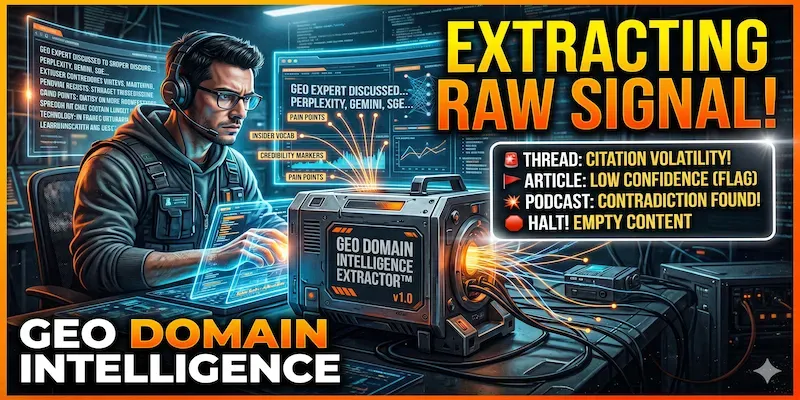
Parses any source for pain
points, insider vocabulary, workflows, and credibility markers.
Distinguishes "stated pain" from "implied pain." Tags every claim
with a confidence level (HIGH/MEDIUM/LOW) — never presents inference
as fact.
...more
Added over 1 month ago
