

Prompt Details
Model
(claude-4-6-sonnet)
Token size
3,009
Example input
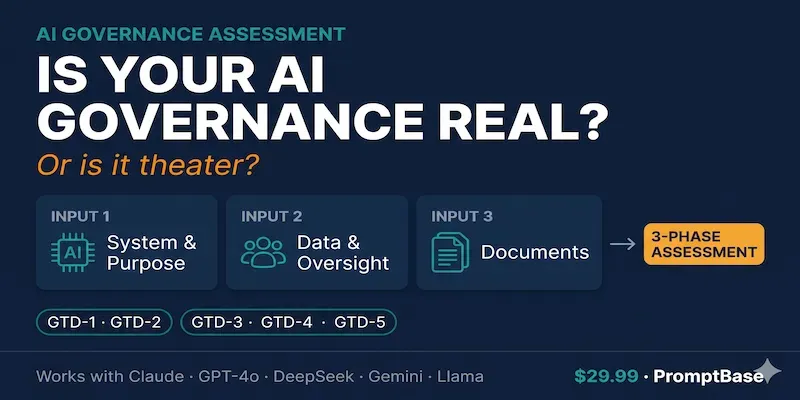
[SYSTEM NAME & PURPOSE]: HireBot AI — Screens job applications, ranks candidates, and recommends the top applicants for recruiter review.
[DATA & OVERSIGHT]: Processes CVs, LinkedIn profiles, cover letters, and interview notes. HR managers review the top 20 ranked candidates before interviews are scheduled.
[ DOCUMENTS]: Privacy Policy, AI Recruitment Policy, Candidate Screening Guidelines, Technical Design Specification.
Example output
# AI GOVERNANCE ASSESSMENT — HIREBOT AI
Running AGAF-UFO-001 Lite v1.0 across three phases.
---
## PHASE 1 — SYSTEM PROFILE (UFO Object Typing)
```
SYSTEM PROFILE (UFO Object)
──────────────────────────────────────────────────────────────────────
Field | Type | Value | Tag
──────────────────────────────────────────────────────────────────────
System name | Quality | HireBot AI | {CONF}
Purpose | Mode | Screen applications, rank | {CONF}
| | candidates, recommend top |
| | applicants for review |
Sensitive data | Quality | true | {CONF}
Data types | Mode | CVs, LinkedIn profiles, | {CONF}
| | cover letters, interview |
| | notes |
Autonomous? | Quality | partial | {CONF}
Human oversight | Mode | HR managers review top 20 | {CONF}
| | ranked candidates before |
| | interviews are scheduled |
Transparency method | Mode | {not stated} | {GAP}
Developer | Mode | {not stated} | {GAP}
──────────────────────────────────────────────────────────────────────
```
**Ontological grounding:** HireBot AI is typed as an **Object** — not a process — because it is a persistent, bounded entity with stable properties (name, purpose, data inputs, autonomy level) that endures across individual screening events and can be evaluated, audited, and held accountable independently of any single decision it produces.
---
## PHASE 2 — RISK CLASSIFICATION + DOCUMENT CLASSIFICATION
### 2A. Risk Classification
```
RISK CLASSIFICATION
──────────────────────────────────────────────────────────────
Transition: UNCLASSIFIED → HIGH-RISK
Reason: The system ranks and recommends candidates for
employment — a decision domain explicitly named
as high-risk under EU AI Act Annex III and
equivalent frameworks; its outputs directly
gate which humans proceed to interview, making
it a consequential filter on employment access.
Confidence: {CONF}
Review note: This classification is context-dependent and may
change if the regulatory regime or deployment
context changes. Jurisdictions without AI-specific
employment regulation may apply different thresholds,
but the functional risk profile does not change with
jurisdiction.
──────────────────────────────────────────────────────────────
```
### 2B. Document Classification
```
──────────────────────────────────────────────────────────────────────
Document | Class | Type | Weight
──────────────────────────────────────────────────────────────────────
Privacy Policy | 2 | Policy / Framework | Medium
| | Defines data handling
| | obligations. Normative
| | force, but not system-
| | level enforcement.
──────────────────────────────────────────────────────────────────────
AI Recruitment Policy | 2 | Policy / Framework | Medium
| | Defines what must happen
| | in AI-assisted hiring.
| | Normative, not technical.
──────────────────────────────────────────────────────────────────────
Candidate Screening | 1 | Awareness Guide | None
Guidelines | | Informational. Describes
| | how screening works.
| | No binding commitments
| | confirmed.
──────────────────────────────────────────────────────────────────────
Technical Design | 3 | Technical Spec | High
Specification | | Specifies how controls
| | are implemented in the
| | system. Enforcement basis
| | exists — content
| | unverified.
──────────────────────────────────────────────────────────────────────
```
**Class coverage:**
- Class 1 — Present ✓
- Class 2 — Present ✓
- Class 3 — Present ✓
- Class 4 — **ABSENT** → No conformance claim exists. No auditable assertion that the system meets any named standard. `{GAP — MEDIUM priority}`
**Notable flag:** The Technical Design Specification (Class 3) is named but its content has not been provided. Its classification as Class 3 is based on the name alone — the enforcement basis it provides is `{UNCONF}` until content is reviewed. A document named "Technical Design Specification" that does not include testable control specifications defaults functionally to Class 1.
---
## PHASE 3 — THEATER DETECTION + REPORT
### 3A. Theater Detection
---
**GTD-1: Monitoring as Governance**
```
Status: PARTIAL
Evidence: HR managers review the top 20 ranked candidates
before interviews are scheduled. This is a review
gate, not a monitoring mechanism per se — however,
the scope of the gate is the concern: only top-20
candidates are reviewed, meaning the system's
decision to exclude candidates below rank 20 is
never seen by a human reviewer. The oversight
covers the output surface, not the exclusion
decisions where harm is most likely to occur.
No monitoring of model drift, demographic
disparity, or ranking consistency is mentioned.
Severity: HIGH
```
---
**GTD-2: Policy Theater**
```
Status: PARTIAL
Evidence: Two Class 2 documents exist (Privacy Policy, AI
Recruitment Policy). Neither has been provided for
content review — enforcement traceability is
{UNCONF}. The pattern is flagged as partial because
named policies exist (not absent), but without
content, assessment cannot confirm that "shall"
statements are tied to named owners, escalation
paths, or consequences for non-compliance. If the
Technical Design Specification does not trace back
to specific policy clauses, GTD-2 upgrades to FULL.
Severity: MEDIUM
```
---
**GTD-3: Explainability as Story**
```
Status: NOT DETECTED
Evidence: No transparency or explanation mechanism has been
described — the field is {GAP}. Assessment cannot
detect GTD-3 where no explainability claim has been
made. This is not a positive finding; it means the
system has made no explainability claim to evaluate.
The absence of any explanation mechanism is itself
a HIGH-priority gap for a HIGH-RISK system.
Severity: N/A
```
---
**GTD-4: Probabilistic Shrugging**
```
Status: NOT DETECTED
Evidence: No uncertainty or accuracy claims have been made
in the inputs provided. No statements of the form
"the model sometimes gets it wrong" appear.
{GAP} — insufficient input to detect.
Severity: N/A
```
---
**GTD-5: Synthetic Authority**
```
Status: NOT DETECTED
Evidence: No vendor certifications, third-party endorsements,
or credential claims appear in the provided inputs.
{GAP} — insufficient input to detect.
Severity: N/A
```
---
**Theater Score: 2 / 5**
*GTD-1 (partial) + GTD-2 (partial) = 2 detected patterns.*
> **Verdict: Governance theater present — address before deployment or audit sign-off.**
The two detected patterns are not incidental. For a HIGH-RISK employment system, a review gate that never sees exclusion decisions (GTD-1) and policies whose enforcement traceability is unverified (GTD-2) represent the exact failure modes most likely to cause harm and least likely to be caught by routine operation.
---
### 3B. Final Report
```
AI GOVERNANCE ASSESSMENT — HIREBOT AI
Date: 27 June 2026
Framework: AGAF-UFO-001 Lite v1.0
━━━━━━━━━━━━━━━━━━━━━━━━━━━━━━━━━━━━━━━━━━━━━━━━━━━━
SUMMARY
━━━━━━━━━━━━━━━━━━━━━━━━━━━━━━━━━━━━━━━━━━━━━━━━━━━━
Risk tier: HIGH-RISK
Theater score: 2/5
Document classes: Class 1 ✓ | Class 2 ✓ | Class 3 ✓ (unconf)
Class 4 ABSENT {GAP — MEDIUM priority}
Overall verdict: CONDITIONAL
━━━━━━━━━━━━━━━━━━━━━━━━━━━━━━━━━━━━━━━━━━━━━━━━━━━━
TOP FINDINGS
━━━━━━━━━━━━━━━━━━━━━━━━━━━━━━━━━━━━━━━━━━━━━━━━━━━━
1. OVERSIGHT BLIND SPOT (GTD-1, HIGH): Human review is
scoped only to the top 20 ranked candidates. The
system's exclusion decisions — which determine who
never enters the pipeline — receive no human review.
For a HIGH-RISK employment system, exclusion
decisions carry equal or greater legal exposure
than inclusion decisions.
2. POLICY ENFORCEABILITY UNVERIFIED (GTD-2, MEDIUM):
Two named policy documents exist but their content
has not been assessed. Enforcement traceability —
named owners, escalation paths, consequences for
non-compliance — is {UNCONF}. The Class 3 document
exists by name only; its status as a genuine
technical specification is unverified.
3. NO EXPLAINABILITY MECHANISM IDENTIFIED ({GAP, HIGH}):
No transparency method for individual ranking
decisions has been described. For candidates who
are excluded below rank 20, there is no stated
mechanism to explain why. This is a legal exposure
under GDPR Article 22 (automated decision-making)
and equivalent frameworks, and a functional
requirement for any HIGH-RISK employment AI.
━━━━━━━━━━━━━━━━━━━━━━━━━━━━━━━━━━━━━━━━━━━━━━━━━━━━
IMMEDIATE ACTIONS
━━━━━━━━━━━━━━━━━━━━━━━━━━━━━━━━━━━━━━━━━━━━━━━━━━━━
1. [GTD-1] Extend human oversight to exclusion
decisions: implement a sampling protocol where a
defined percentage of sub-rank-20 exclusions are
reviewed each cycle by a named HR reviewer. Log
reviewer identity, date, and finding. Do not treat
"top 20 review" as complete oversight.
2. [GTD-2] Audit the AI Recruitment Policy for
enforcement completeness: every "shall" statement
must name an owner role, a verification mechanism,
and a consequence for non-compliance. Map each
policy clause to a corresponding control in the
Technical Design Specification. Where no control
exists, the clause is unenforceable — name it
and remediate or remove it.
3. [GAP — Explainability] Define and implement a
candidate-facing explanation mechanism for
exclusion decisions: at minimum, the system must
be able to produce a ranked list of features that
influenced a given candidate's score. Log this per
decision. "Available on request" is not sufficient
— the mechanism must be automatic and auditable.
4. [GAP — Class 4] Commission or produce a conformance
claim document: identify the specific standard(s)
the system is intended to meet (EU AI Act, ISO/IEC
42001, internal baseline), and produce an auditable
assertion of conformance with evidence references.
Without this, there is no verifiable governance
baseline.
━━━━━━━━━━━━━━━━━━━━━━━━━━━━━━━━━━━━━━━━━━━━━━━━━━━━
WHAT THIS ASSESSMENT DOES NOT COVER
━━━━━━━━━━━━━━━━━━━━━━━━━━━━━━━━━━━━━━━━━━━━━━━━━━━━
This assessment covers system profiling, risk tier
classification, document classification, and governance
theater detection.
It does not cover: specification grading of individual
controls, accountability node mapping, recursive loop
review, human-in-the-loop trigger completeness, or
conformance verification against specific regulations.
A full governance assessment covers all of these.
Specific unassessed exposures relevant to HireBot AI
include: bias and fairness testing methodology,
demographic disparity monitoring, data retention and
deletion obligations under GDPR, model drift detection
cadence, and supplier/vendor accountability if HireBot
AI is a third-party system.
━━━━━━━━━━━━━━━━━━━━━━━━━━━━━━━━━━━━━━━━━━━━━━━━━━━━
```
---
**Assessor note:** The document inventory for HireBot AI is stronger than most systems at this tier — four named documents including a Class 3 specification is a reasonable starting position. The critical vulnerabilities are not in what documents exist but in what the oversight mechanism is actually designed to see. A system that screens hundreds of candidates but only shows a human reviewer the top 20 has built governance around its successes, not its risks. That inversion is the core finding.

 Instant access
 Commercial use
 Money‑back
By purchasing this prompt, you agree to our terms of service
5.0
1 review
1
Favorites
22
Views
CLAUDE-4-6-SONNET


UFO Ontology + Theater Detection
AI System Governance Audit — Risk, Theater, Documents
AI Governance Assessment — 3-Phase UFO Protocol
Governance Theater Detector — Any AI System, Any Model
...more
Added over 1 month ago

- Reviews for this prompt (1)