

Prompt Details
Model
Chat - (gpt-5.5)
Token size
1,955
Example input
[PRODUCT]: CodeForge Bootcamp -- a 16-week part-time web development bootcamp with 1-on-1 career coaching and a hiring guarantee
[TARGET_CUSTOMER]: Career-changers aged 25-40 in non-tech roles earning $45K-$75K, researched bootcamps in the past 90 days, considering a career switch into a junior developer role within 18 months
[LAUNCH_BUDGET]: $95,000 total across the 12-week launch window
[LAUNCH_TIMELINE]: Hard launch on June 3 for the September cohort. Pre-launch waitlist + content campaign from mid-March (12 weeks).
[LAUNCH_GOAL]: 85 enrolled students for the September cohort, with 30% paid via income-share agreements
Example output
1. Launch Strategy Overview
Launch type: Waitlist-to-hard-launch campaign. CodeForge Bootcamp should build qualified demand through a 12-week waitlist and content engine, then convert concentrated urgency on June 3 when September cohort applications officially open. The waitlist phase lets the team educate skeptical career-changers, pre-qualify ISA interest, and create proof before asking for enrollment deposits.
Launch tier: Tier 1 major launch. The enrollment target of 85 students, the hiring guarantee, the ISA mix goal, and the 12-week runway justify a fully orchestrated launch across product marketing, admissions, paid media, partnerships, career services, sales, and customer support. Budget should be concentrated on high-intent acquisition, trust-building proof, admissions conversion, and post-launch retargeting rather than broad awareness.
Core narrative: Millions of capable professionals are stuck in roles that no longer match their ambition, but the leap into tech feels risky, expensive, and hard to navigate alone. CodeForge Bootcamp is built for serious career-changers who need more than tutorials: they need structure, coaching, accountability, portfolio proof, and a clear hiring path. The 16-week part-time format lets students keep earning while they train, while 1-on-1 career coaching and a hiring guarantee reduce the perceived risk of switching careers. This launch should position CodeForge as the practical, outcomes-driven path from “I’ve researched bootcamps” to “I’m ready to become a junior developer.”
Positioning statement: For career-changers aged 25-40 in non-tech roles earning $45K-$75K, CodeForge Bootcamp is the part-time web development bootcamp that helps them confidently transition into a junior developer role within 18 months, unlike self-paced courses or generic bootcamps, because it combines a structured 16-week curriculum, 1-on-1 career coaching, portfolio-based training, ISA payment options, and a hiring guarantee.
Key messages:
Lower the risk of switching careers: Keep your job while you train part-time, and get a hiring guarantee designed for serious career-changers.
Build job-ready proof, not just course certificates: Graduate with real web development projects, interview preparation, GitHub polish, and a portfolio that hiring teams can evaluate.
Get coached from first application to first offer: CodeForge pairs technical training with 1-on-1 career coaching so students are not left to navigate the job search alone.
2. Pre-Launch Phase
Audience building
Waitlist / early-access strategy: The waitlist should function as both a demand-capture mechanism and a qualification funnel. Prospects join for early access to September cohort applications, a $500 launch scholarship window, priority ISA review, and access to the “Career Switch Readiness Kit.” Every waitlist member receives a segmented nurture path based on their timeline, technical experience, and financing preference, with higher-intent leads routed to admissions consultations before launch day. The target is to enter June 3 with at least 1,900 qualified waitlist leads, 425 booked admissions calls, and 140 enrollment-ready applicants.
Teaser content plan:
LinkedIn | Founder-style text post | “The real reason career-changers fail at coding bootcamps is not motivation — it is missing structure.” | T-minus 8 weeks
TikTok / Reels | 45-second myth-busting video | “Can you actually become a junior developer while keeping your full-time job?” | T-minus 7 weeks
YouTube Shorts | Student journey mini-story | “From customer support to junior frontend developer: what the weekly schedule really looked like.” | T-minus 6 weeks
LinkedIn carousel | Salary and transition readiness checklist | “5 signs you are ready for a career switch into web development.” | T-minus 5 weeks
Reddit / community post | Transparent decision guide | “Bootcamp vs. self-taught vs. degree: how to choose if you have 18 months.” | T-minus 4 weeks
Webinar clip | Career coach talking head | “Why your first developer job search starts before you write your first line of code.” | T-minus 2 weeks
Influencer / partnership outreach:
Career-change creators on TikTok and YouTube: Angle is “realistic path into tech without quitting your job”; ask for one sponsored story, one short-form video, and one live Q&A appearance.
Coding educators with beginner audiences: Angle is “what comes after free tutorials”; ask for co-hosted webinar and tracked referral link to the waitlist.
Workforce development nonprofits / local career centers: Angle is “accessible, outcomes-focused pathway for underemployed professionals”; ask for newsletter placement and info-session promotion.
LinkedIn career coaches serving mid-career professionals: Angle is “career reinvention into tech with structured support”; ask for LinkedIn Live collaboration and referral partnership.
Tech hiring managers / junior developer mentors: Angle is “what hiring managers actually expect from bootcamp grads”; ask for quote, webinar panel, and curriculum validation testimonial.
PR pitch angles:
“New part-time bootcamp launches with hiring guarantee for career-changers priced out of traditional tech transitions.” The story focuses on professionals earning $45K-$75K who want to move into tech without taking on immediate full tuition risk. It positions CodeForge as a practical response to skepticism around bootcamp ROI.
“CodeForge opens September cohort to help non-tech workers become junior developers without quitting their jobs.” The story highlights the 16-week part-time model, 1-on-1 coaching, and portfolio-based training. It gives reporters a timely education-and-careers angle tied to economic mobility.
“Income-share option aims to make web development training more accessible for career switchers.” The story focuses on the 30% ISA enrollment goal and the decision to align payment with student outcomes. It should include transparent eligibility criteria and safeguards to avoid overpromising.
Community seeding:
Post a transparent “career switch readiness checklist” in relevant Reddit communities, avoiding hard selling and linking only to the free readiness kit.
Host two free “Is a bootcamp right for me?” office hours in Discord and Slack communities for beginner developers.
Seed alumni-style project breakdowns in LinkedIn groups for career-changers, focusing on portfolio proof rather than promotional claims.
Answer Quora and Reddit questions around “bootcamp while working full-time,” “ISA bootcamp,” and “how to become junior developer in 12-18 months” with practical frameworks.
Run a private waitlist AMA with instructors, career coaches, and admissions to surface objections before launch week.
Internal readiness
Sales enablement materials:
Admissions call script with objection handling for cost, time commitment, ISA eligibility, hiring guarantee terms, and job-market concerns.
One-page competitive battlecard comparing CodeForge against self-paced courses, university certificates, full-time bootcamps, and degree programs.
ROI calculator showing current salary, expected junior developer salary range, tuition path, ISA path, and break-even scenarios.
Student qualification rubric for admissions reps covering motivation, time availability, technical readiness, financing fit, and career timeline.
Hiring guarantee FAQ with plain-language eligibility requirements, student obligations, exclusions, and escalation guidance.
Customer support prep checklist:
Finalize FAQ covering curriculum, schedule, tuition, ISA terms, hiring guarantee, admissions steps, refund policy, and technical requirements.
Prepare support macros for the top 20 expected questions from waitlist and launch-week applicants.
Train support team on escalation paths for ISA, payment, legal, accessibility, technical, and refund questions.
Set up live chat coverage from 8am-9pm local operating hours during launch week.
Create a status page and fallback application form in case the main landing page or application flow fails.
Build a daily feedback digest from live chat, admissions calls, social comments, and email replies.
Confirm response-time SLA: under 5 minutes for live chat, under 4 hours for email during launch week.
Beta testing plan: Run a beta cohort simulation with 20-25 qualified waitlist members completing one technical module, one career-coaching exercise, and one admissions-style readiness review. Capture quantitative feedback through NPS, lesson completion, time-to-complete, and confidence score, then capture qualitative objections through 30-minute interviews. Feed findings into landing page copy, sales scripts, FAQ, and launch-week messaging by T-minus 2 weeks.
3. Launch Week Execution
Day 1 -- Applications Open
Primary activity + owner: Open September cohort applications and activate all conversion paths; owned by Head of Growth with Admissions Lead and Product Marketing.
Content to publish: Launch announcement landing page, 60-second launch video, LinkedIn founder announcement, TikTok/Reels launch clip, student outcome proof carousel.
Emails to send: Waitlist “applications are open” email, segmented ISA-priority email, admissions-call reminder to high-intent leads, partner announcement email.
Paid media action: Increase spend by 35% on highest-intent search and retargeting campaigns; launch dedicated “September cohort now open” creative across Meta, TikTok, LinkedIn, and Google Search.
Community / social action: Post AMA thread in owned community, respond to launch comments within 15 minutes, seed launch announcement in approved partner communities.
Internal coordination: 8am launch standup, hourly dashboard review, admissions capacity check, support queue review, issue log ownership assigned.
Day 2 -- Proof & Trust
Primary activity + owner: Build credibility around outcomes, coaching, and guarantee; owned by Product Marketing with Career Services.
Content to publish: “What the hiring guarantee actually means” explainer, career coach video, portfolio project examples, guarantee FAQ carousel.
Emails to send: Proof email to waitlist non-clickers, FAQ email to applicants who started but did not submit, admissions follow-up to booked-call no-shows.
Paid media action: Rotate in proof-focused creative featuring coaching, portfolio outcomes, and guarantee clarity; suppress applicants from prospecting audiences.
Community / social action: Host live Q&A with career coach; collect and answer top objections publicly.
Internal coordination: Review Day 1 funnel drop-off, update FAQ from support themes, recalibrate admissions call slots.
Day 3 -- Career Switch Reality Check
Primary activity + owner: Educate prospects on fit, readiness, and weekly commitment; owned by Content Lead with Admissions.
Content to publish: “Can you do this while working full-time?” article, weekly schedule infographic, student time-management video.
Emails to send: Readiness quiz email, “your 16-week schedule” email to leads who clicked curriculum content, calendar reminder for webinar registrants.
Paid media action: Launch quiz-based lead generation campaign to cold audiences and retarget quiz completers to admissions consult.
Community / social action: Share a practical weekly study schedule in Reddit and LinkedIn groups with no hard CTA beyond the free readiness quiz.
Internal coordination: Admissions team tags leads by readiness level; marketing updates nurture segments based on quiz answers.
Day 4 -- Financing & ISA Clarity
Primary activity + owner: Reduce tuition and ISA confusion; owned by Admissions Lead with Finance/Operations.
Content to publish: Tuition options explainer, ISA eligibility guide, ROI calculator walkthrough, “questions to ask before choosing an ISA” post.
Emails to send: Financing options email, ISA review invitation to qualified leads, abandoned-application financing objection email.
Paid media action: Retarget pricing-page visitors with financing clarity creative and consultation CTA.
Community / social action: Run a live “Ask Admissions Anything About Tuition and ISA” session.
Internal coordination: Finance validates all ISA language; support receives updated escalation notes; admissions tracks ISA-intent conversion rate.
Day 5 -- Instructor & Curriculum Depth
Primary activity + owner: Show that CodeForge teaches job-relevant skills, not generic tutorials; owned by Curriculum Lead with Product Marketing.
Content to publish: Instructor intro video, sample lesson clip, capstone project walkthrough, curriculum module breakdown.
Emails to send: Curriculum deep-dive email, sample lesson access email, applicant reminder before weekend decision window.
Paid media action: Push video-view retargeting from instructor/sample lesson content to application-start CTA.
Community / social action: Instructor hosts 45-minute beginner-friendly coding demo with live Q&A.
Internal coordination: Review curriculum-related objections; update admissions talk track with sample project proof points.
Day 6 -- Social Proof & Peer Momentum
Primary activity + owner: Create confidence through peer activity and cohort momentum; owned by Community Lead with Growth.
Content to publish: “Who is applying?” anonymized cohort snapshot, applicant milestone post, testimonials from beta testers or early reviewers.
Emails to send: “You are not starting over alone” community-focused email, application deadline reminder for launch scholarship window.
Paid media action: Add social proof creative to retargeting audiences; increase weekend retargeting frequency cap moderately for application abandoners.
Community / social action: Open waitlist-only Slack/Discord preview channel for applicants and host peer introductions.
Internal coordination: Admissions shares enrollment pacing report; team identifies highest-probability leads for personal outreach.
Day 7 -- Deadline & Conversion Push
Primary activity + owner: Convert high-intent prospects before launch-week scholarship and priority ISA review window closes; owned by Head of Growth with Admissions.
Content to publish: Final launch-week deadline post, scholarship reminder, “last chance for priority review” video, FAQ recap.
Emails to send: 24-hour reminder, 6-hour reminder, final 2-hour reminder to started-but-not-submitted applicants, personalized admissions follow-ups.
Paid media action: Shift 70% of daily spend to retargeting and branded search; pause underperforming cold ad sets.
Community / social action: Host final office hours; pin deadline reminder in owned community; answer last-minute objections live.
Internal coordination: End-of-week retrospective, lead scoring refresh, Week 2 optimization plan, sales handoff for all warm leads.
Launch Day Hour-by-Hour
6am -- Final QA on landing page, application form, analytics, CRM routing, payment flow, ISA interest capture, and fallback form.
8am -- Publish launch announcement, send waitlist email, activate paid campaigns, open support/live chat, and start launch command center.
10am -- Review first funnel data: page views, conversion rate, application starts, application submits, booked calls, support issues, and broken links.
12pm -- Publish founder LinkedIn post and launch video across social; admissions begins first wave of personal outreach to highest-intent waitlist leads.
2pm -- Adjust paid budget toward strongest early channels and creative; update internal FAQ based on live objections.
4pm -- Send segmented reminder to email clickers who have not started an application; run community AMA.
6pm -- Review performance against day target; trigger low-traffic or low-conversion contingency if needed.
9pm -- Send end-of-day internal report, summarize blockers, assign overnight fixes, and queue Day 2 proof-focused content.
Contingency Plans
Site crash / tech issue: Immediately route all traffic to a lightweight backup landing page with application-intent capture, phone/email support, and “we will preserve your launch scholarship timestamp” reassurance. Pause paid campaigns that send to the broken flow, pin a transparent status update on social, and have admissions manually contact anyone who submitted a fallback form. Trigger if page load time exceeds 5 seconds for 15 minutes, form submissions fail, payment errors exceed 3%, or analytics show abnormal drop-off.
Negative feedback / PR issue: Acknowledge quickly, clarify facts without defensiveness, and route complex concerns to a published FAQ on ISA terms, hiring guarantee eligibility, and student obligations. Product Marketing owns the public response, Legal/Finance validates financing language, and Support receives approved response macros. Trigger if a negative post gets meaningful engagement, if misinformation spreads about ISA or guarantee terms, or if support tickets show repeated confusion around the same claim.
Low traffic by hour 6: Shift budget toward high-intent Google Search, retargeting, partner email drops, and creator posts with proven audiences. Pull forward the scholarship/deadline angle, ask partners to publish same-day, and have admissions personally contact top waitlist leads. Trigger if launch-day sessions are below 60% of plan by 2pm or if application starts are below 40% of the day-one target by 6pm.
4. Channel Strategy & Budget Allocation
Channel Role in funnel Specific tactics Budget $ % of total Timeline
Google Search + Performance Max High-intent demand capture Campaigns for “part-time coding bootcamp,” “web development bootcamp,” “ISA coding bootcamp,” “career change to developer,” branded search, competitor-intent terms, application retargeting $24,700 26% T-minus 8 through launch + Weeks 1-3
Meta Ads Demand creation + retargeting Reels, Stories, lead forms, landing-page conversion campaigns, testimonials, schedule proof, financing explainer, abandoned-application retargeting $18,050 19% T-minus 7 through launch + Weeks 1-3
TikTok / Short-form creator paid Awareness + emotional resonance Creator-style videos about career switching, “day in the life while working full-time,” bootcamp myth-busting, Spark Ads amplification $12,350 13% T-minus 6 through launch + Week 2
LinkedIn Ads + organic executive content Professional credibility + mid-funnel conversion Sponsored posts to non-tech professionals, retargeting content viewers, founder posts, career-change carousel, webinar promotion $10,450 11% T-minus 8 through launch + Week 1
Partnerships + webinars Trust-building + qualified leads Career coach partnerships, beginner coding educator webinars, workforce org newsletter swaps, live Q&As, tracked referral incentives $14,250 15% T-minus 8 through Week 2
Content / creative production Asset engine across funnel Launch video, landing page creative, student story edits, instructor clips, one-pager, ROI calculator, curriculum visuals, ad creative variants $9,500 10% T-minus 8 through launch week
PR + community + launch ops Earned trust + operational coverage PR support, community seeding, Reddit/Discord AMAs, launch monitoring, live chat surge support, fallback page/tooling $5,700 6% T-minus 6 through Week 4
Total $95,000 100%
Why this split fits: The largest investment goes to high-intent search and retargeting because the audience has researched bootcamps in the past 90 days and is already problem-aware. Meta, TikTok, LinkedIn, and partnerships balance emotional motivation, professional credibility, and trust-building for a high-consideration purchase. Creative, PR, community, and launch operations are funded enough to reduce conversion friction around the biggest risks: tuition, ISA clarity, hiring guarantee trust, and time commitment.
5. Content & Creative Plan
Launch video (60s script outline)
Hook: “You do not need to quit your job to start becoming a web developer — but you do need a serious plan.”
Problem: Show a career-changer stuck after researching bootcamps, free tutorials, YouTube playlists, and conflicting advice, still unsure how to move from interest to employability.
Solution: Introduce CodeForge Bootcamp as a 16-week part-time web development program with structured lessons, real portfolio projects, weekly accountability, 1-on-1 career coaching, and September cohort applications now open.
Proof: Feature quick cuts of curriculum modules, instructor support, portfolio reviews, mock interviews, beta participant quote, and hiring guarantee explanation.
CTA: “Apply for the September cohort by June 9 for launch-week scholarship consideration and priority ISA review.”
Landing page wireframe
1. Hero section: Lead with “Become a job-ready web developer without quitting your job.” Include September cohort date, 16-week part-time format, hiring guarantee, ISA availability, and primary CTA: “Apply for September Cohort.”
2. Audience identification: Speak directly to non-tech professionals earning $45K-$75K who have researched bootcamps but need a safer, structured path. Copy should validate uncertainty and frame CodeForge as the decisive next step.
3. Program outcomes: Show the promised transformation: beginner or early learner to junior developer candidate with portfolio projects, interview readiness, GitHub presence, and job-search support.
4. How the 16 weeks work: Break the program into four phases: foundations, frontend, backend/full-stack, portfolio + career launch. Include weekly time commitment and sample schedule for working adults.
5. Career coaching + hiring guarantee: Explain 1-on-1 coaching, resume/GitHub/LinkedIn support, mock interviews, employer outreach, and the exact meaning of the hiring guarantee in plain language.
6. Tuition and ISA options: Present upfront tuition, payment plan, and ISA path with eligibility criteria. Copy should emphasize transparency, not pressure.
7. Proof and credibility: Include instructor credentials, beta feedback, portfolio examples, hiring manager quotes, and partner logos where available.
8. Application process + urgency: Show three steps: apply, complete readiness review, secure seat. Include launch-week scholarship deadline, limited September cohort capacity, and CTA repeated with FAQ beneath.
Launch email sequence
Email 1 -- Subject: September applications are open: become a web developer without quitting your job
CodeForge Bootcamp is now accepting applications for the September cohort.
The program is built for working career-changers who need structure, coaching, and a lower-risk path into junior developer roles.
Launch-week applicants receive priority ISA review and scholarship consideration.
CTA: Apply for the September cohort
Email 2 -- Subject: What 16 weeks at CodeForge actually looks like
Show the weekly schedule for a part-time student balancing work, learning, and portfolio-building.
Explain the four curriculum phases and what students will be able to build by the end.
Address the objection: “I am not sure I have enough time.”
CTA: See the curriculum and apply
Email 3 -- Subject: The career coaching starts before the job search
Explain 1-on-1 coaching, resume support, mock interviews, GitHub/portfolio review, and job-search planning.
Reinforce that CodeForge is not just technical lessons; it is a career transition system.
Clarify how the hiring guarantee works and what students must do to remain eligible.
CTA: Book an admissions consultation
Email 4 -- Subject: Final reminder: priority ISA review closes tonight
Remind prospects that launch-week scholarship consideration and priority ISA review are closing.
Address final objections around tuition, readiness, and time commitment with links to FAQ and calculator.
Create urgency around September cohort seat availability without exaggeration.
CTA: Finish your application
Social launch posts
LinkedIn
Post 1: “Today we opened applications for CodeForge Bootcamp’s September cohort. It is built for the customer support reps, operations coordinators, teachers, retail managers, and analysts who know they want a future in tech but cannot afford to quit their jobs to chase it. In 16 weeks, students build real web projects, get 1-on-1 career coaching, and follow a structured path toward junior developer readiness. Applications are open now, with priority ISA review during launch week.”
Post 2: “Most career-changers do not need more random tutorials. They need a plan, feedback, accountability, and proof they can show employers. CodeForge Bootcamp combines part-time web development training with portfolio reviews, interview prep, GitHub polish, and career coaching so students are not left to figure out the transition alone. September cohort applications are now open.”
Post 3: “Considering a bootcamp this year? Ask these five questions before you choose: Can I keep working while enrolled? What will I actually build? Who reviews my portfolio? What career support happens before graduation? What does the guarantee really require from me? We designed CodeForge around those questions. Applications for September are open.”
TikTok / Instagram Reels
Post 1: “POV: You have watched 37 coding tutorials, saved 12 bootcamp tabs, and still do not know what to do next. CodeForge Bootcamp is the 16-week part-time plan for career-changers who want to become junior developer candidates without quitting their jobs. September applications are open.”
Post 2: “Can you become a web developer while working full-time? Not by casually watching videos at midnight. But with a weekly schedule, instructor feedback, real projects, and career coaching, you can make serious progress. That is why we built CodeForge.”
Post 3: “Three things your first developer job search needs before you apply: a portfolio that proves you can build, a GitHub that shows your work, and interview stories that connect your past experience to your new skills. CodeForge helps you build all three.”
Blog / long-form
Title: Bootcamp, Self-Taught, or Degree: The Career-Changer’s Guide to Becoming a Junior Web Developer in 18 Months
Outline:
Why career-changers get stuck after the research phase.
The real tradeoffs between self-paced learning, degrees, full-time bootcamps, and part-time bootcamps.
How to assess your readiness: time, money, motivation, learning style, and career timeline.
What employers expect from junior developer candidates: projects, fundamentals, communication, and proof of consistency.
How financing options, including ISAs, should be evaluated responsibly.
A practical 18-month transition roadmap from exploration to first junior developer role.
Sales one-pager outline
1. Headline and promise: “A 16-week part-time web development bootcamp for career-changers ready to move into tech.”
2. Who it is for: Non-tech professionals aged 25-40, earning $45K-$75K, who want a junior developer role within 18 months.
3. Program structure: Weekly schedule, curriculum phases, live support, assignments, portfolio projects, and expected time commitment.
4. Career support: 1-on-1 coaching, resume, LinkedIn, GitHub, portfolio review, mock interviews, job-search plan, and hiring guarantee.
5. Financing options: Upfront tuition, payment plan, ISA option, eligibility, and scholarship window.
6. Application process: Apply, readiness review, admissions consultation, financing confirmation, seat secured.
6. Post-Launch (Weeks 1-4)
Week 1 -- Sustain momentum
Publish a “launch week results” update focused on applicant momentum, top questions, and remaining September cohort seats.
Continue daily admissions outreach to started-but-not-submitted applicants and booked-call no-shows.
Release three proof assets: curriculum walkthrough, coaching demo, and financing explainer.
Host one evening webinar for working professionals who could not attend launch-week sessions.
Refresh retargeting audiences based on launch-week engagement: pricing visitors, video viewers, quiz completers, and application abandoners.
Week 2 -- Feedback & iteration
Analyze landing page heatmaps, form drop-off, call objections, support tickets, ad creative performance, and email engagement.
Update landing page hero, tuition section, FAQ, and hiring guarantee copy based on highest-volume objections.
Run five to eight applicant interviews with those who applied and those who abandoned.
Re-score the full lead database and prioritize personal admissions outreach by fit and intent.
Test two new offers: “free readiness review” and “portfolio roadmap consultation.”
Week 3 -- Retargeting & second-wave
Launch second-wave campaign around “Still deciding?” with bootcamp comparison guide and ROI calculator.
Re-engage cold waitlist leads with a “choose your path” email: self-taught, bootcamp, degree, or not yet.
Use partner channels for another webinar push, especially career coaches and beginner coding educators.
Increase retargeting spend toward application abandoners and admissions-call attendees who have not enrolled.
Publish a long-form student-readiness guide and promote it through LinkedIn and search.
Week 4 -- Retrospective questions
Which channel delivered the highest number of enrolled students, not just leads?
Which objections most commonly prevented qualified applicants from enrolling?
Did ISA interest convert at the required pace toward 30% of paid students?
Which creative messages produced the highest application completion rate?
Where did admissions capacity constrain conversion?
What must be fixed before the next cohort launch cycle?
Ongoing lead nurture: Leads who do not enroll should enter a 10-week nurture path segmented by readiness, financing interest, and target timeline. The nurture should alternate education, proof, student stories, coding challenges, career coaching content, and admissions consultation CTAs. The goal is to convert late deciders for the September cohort while building demand for the next cohort.
7. KPIs
Pre-launch
1,900 qualified waitlist leads by June 2.
425 admissions calls booked before launch day.
140 application-ready leads tagged as high intent in CRM.
38% email open rate and 7% click-through rate across nurture sequence.
1,200 readiness quiz completions with at least 35% scoring as “ready within 6 months.”
Launch week
42,000 landing page sessions.
7.5% application-start rate from landing page visitors.
42% application completion rate from application starts.
675 submitted applications.
310 admissions calls booked during launch week.
45 confirmed enrollments or deposits by end of launch week.
30% of paid/enrolled students selecting or entering ISA review path.
30 days
70 confirmed enrollments toward 85-student September goal.
900 submitted applications cumulative.
Cost per submitted application at or below $105.
60 days
85 confirmed enrollments with qualified waitlist for overflow.
26 students paid or approved via ISA path, meeting roughly 30% target.
Enrollment-to-attended-orientation intent confirmation above 90%.
90 days
85 active September cohort students retained through onboarding.
95% completion of pre-work before first live session.
Student readiness baseline captured for 100% of cohort: technical assessment, career goals, financing status, and coaching plan.
Channel ROI targets
Google Search + Performance Max: Cost per submitted application at or below $85; enrollment CPA at or below $1,250.
Meta Ads: Cost per qualified lead at or below $38; application CPA at or below $115.
TikTok / Short-form creator paid: Cost per qualified lead at or below $32; 20% of leads completing readiness quiz.
LinkedIn Ads + organic executive content: Cost per admissions call booked at or below $190; lead-to-application rate above 18%.
Partnerships + webinars: Cost per application at or below $70; webinar attendee-to-application rate above 22%.
Content / creative production: Improve paid conversion rate by at least 20% through creative testing and landing page proof assets.
PR + community + launch ops: Generate at least 250 qualified leads, 50 applications, and measurable reduction in repeated support objections after FAQ updates.
8. Risk Register
Risk: Hiring guarantee creates skepticism or legal/consumer-trust concerns | Likelihood: M | Impact: H | Mitigation: Publish plain-language guarantee terms, eligibility requirements, and student obligations; train admissions and support on compliant language | Contingency trigger: More than 10% of support tickets or social comments challenge the guarantee terms.
Risk: ISA terms are misunderstood or perceived as predatory | Likelihood: M | Impact: H | Mitigation: Use transparent ISA explainer, calculator, examples, and finance-reviewed FAQ; avoid aggressive ISA messaging | Contingency trigger: Negative social post gains traction or ISA-related application abandonment exceeds 25%.
Risk: Paid lead quality is too low to hit 85 enrollments | Likelihood: M | Impact: H | Mitigation: Optimize toward application completion and admissions call attendance, not lead volume; use qualification quiz and CRM scoring | Contingency trigger: Lead-to-application rate falls below 12% after first 72 hours.
Risk: Admissions team cannot handle call volume during launch week | Likelihood: M | Impact: M | Mitigation: Add temporary call blocks, automate reminders, use group info sessions, and prioritize high-fit leads | Contingency trigger: Available call slots are booked more than five days out or no-show follow-up exceeds 24 hours.
Risk: Audience doubts ability to complete program while working full-time | Likelihood: H | Impact: M | Mitigation: Publish weekly schedule, time commitment calculator, student routine content, and readiness assessment | Contingency trigger: “time commitment” becomes top objection in admissions notes for two consecutive days.
Risk: Landing page conversion underperforms despite traffic | Likelihood: M | Impact: H | Mitigation: Pre-test messaging, use heatmaps, simplify CTA, add financing and guarantee FAQ above the fold | Contingency trigger: Application-start rate stays below 5% after 5,000 qualified sessions.
Risk: September cohort capacity fills unevenly with too few ISA students | Likelihood: M | Impact: M | Mitigation: Track ISA intent daily, promote priority ISA review to eligible leads, and clarify approval process early | Contingency trigger: ISA share of paid/enrolled students remains below 22% by Day 7.
9. Decision Tree (if launch underperforms)
At 24 hours below target: If traffic is below target, shift 20% of daily spend from awareness to Google Search, retargeting, partner drops, and creator amplification. If traffic is healthy but application starts are low, replace hero copy with clearer outcome, move tuition/ISA clarity higher, and add stronger CTA above the fold. If application starts are healthy but completions are low, shorten the form, add save-and-resume, and have admissions contact abandoners within two hours.
At 72 hours below target: Run a conversion sprint: review call recordings, support tickets, heatmaps, ad comments, email replies, and application drop-off by source. Launch two emergency assets addressing the top objection, such as “Is CodeForge worth it?” or “Can I do this while working full-time?” and send them to all high-intent non-applicants. Reallocate up to 30% of remaining budget toward the top two channels by submitted-application CPA and pause any channel with poor lead-to-application quality.
At 7 days below target: Introduce a second-wave offer, such as free readiness review, scholarship extension for qualified applicants, or limited priority coaching session for completed applications. Expand partner webinars and direct admissions outreach to warm leads, while launching a comparison campaign against self-paced learning and full-time bootcamps. If enrollments are still below 55 confirmed students, create a weekly executive war-room cadence until the 85-seat goal is reached.
10. One-Page Launch Checklist
Week Deliverable Owner type Status
T-minus 12 Launch strategy, goals, funnel targets, and enrollment model finalized VP Product Marketing Not started
T-minus 12 Budget allocation approved across seven channels Growth Lead Not started
T-minus 12 September cohort application flow mapped Admissions Lead Not started
T-minus 12 CRM stages, lead scoring, and ISA-interest field configured Marketing Ops Not started
T-minus 11 Positioning statement and three key messages finalized Product Marketing Not started
T-minus 11 Landing page wireframe approved Product Marketing Not started
T-minus 11 Hiring guarantee FAQ drafted Legal / Product Marketing Not started
T-minus 11 Tuition and ISA messaging reviewed Finance / Legal Not started
T-minus 10 Waitlist landing page launched Web / Growth Not started
T-minus 10 Readiness quiz built and connected to CRM Marketing Ops Not started
T-minus 10 Early-access offer and scholarship language finalized Growth Lead Not started
T-minus 10 Audience segmentation rules created Lifecycle Marketing Not started
T-minus 9 Teaser content calendar completed Content Lead Not started
T-minus 9 Influencer and partner target list finalized Partnerships Lead Not started
T-minus 9 PR pitch angles and media list completed PR Lead Not started
T-minus 9 Community seeding guidelines written Community Lead Not started
T-minus 8 Waitlist / early-access campaign launched Growth Lead Not started
T-minus 8 LinkedIn teaser post published Content Lead Not started
T-minus 8 Google Search campaign build started Paid Media Lead Not started
T-minus 8 Sales enablement materials outlined Admissions Lead Not started
T-minus 8 Customer support FAQ outline created Support Lead Not started
T-minus 7 TikTok / Reels myth-busting teaser published Social Lead Not started
T-minus 7 Meta lead and retargeting campaigns launched Paid Media Lead Not started
T-minus 7 Admissions call script drafted Admissions Lead Not started
T-minus 7 Support macros drafted Support Lead Not started
T-minus 7 Beta testing participant recruitment started Product Lead Not started
T-minus 6 YouTube Shorts student journey teaser published Social Lead Not started
T-minus 6 PR outreach begins PR Lead Not started
T-minus 6 First partner webinar scheduled Partnerships Lead Not started
T-minus 6 Beta cohort simulation starts Product Lead Not started
T-minus 6 Competitive battlecard completed Product Marketing Not started
T-minus 5 LinkedIn readiness checklist carousel published Content Lead Not started
T-minus 5 ROI calculator drafted Product Marketing / Finance Not started
T-minus 5 Curriculum sample lesson selected Curriculum Lead Not started
T-minus 5 Live chat escalation paths documented Support Lead Not started
T-minus 5 Community office hours scheduled Community Lead Not started
T-minus 4 Bootcamp comparison community post published Content Lead Not started
T-minus 4 Launch video script approved Product Marketing Not started
T-minus 4 Landing page copy drafted Product Marketing Not started
T-minus 4 Instructor and career coach video shoots scheduled Creative Lead Not started
T-minus 4 Admissions qualification rubric finalized Admissions Lead Not started
T-minus 3 Launch video produced Creative Lead Not started
T-minus 3 Landing page designed and built Web Lead Not started
T-minus 3 Four-email launch sequence drafted Lifecycle Marketing Not started
T-minus 3 Sales one-pager drafted Product Marketing Not started
T-minus 3 Beta feedback analyzed Product Lead Not started
T-minus 2 Webinar clip teaser published Social Lead Not started
T-minus 2 Landing page QA completed Web / Marketing Ops Not started
T-minus 2 Paid creative variants uploaded Paid Media Lead Not started
T-minus 2 Customer support training completed Support Lead Not started
T-minus 2 Sales enablement training completed Admissions Lead Not started
T-minus 1 Final launch command center plan completed Growth Lead Not started
T-minus 1 Application form, payment flow, and ISA capture QA completed Marketing Ops / Finance Not started
T-minus 1 Launch-day emails scheduled Lifecycle Marketing Not started
T-minus 1 Partner launch assets delivered Partnerships Lead Not started
T-minus 1 Fallback landing page and form ready Web Lead Not started
Launch Day Applications open announcement published Growth Lead Not started
Launch Day Launch video published Creative Lead Not started
Launch Day Waitlist launch email sent Lifecycle Marketing Not started
Launch Day Paid campaigns activated and monitored Paid Media Lead Not started
Launch Day Community AMA launched Community Lead Not started
Launch Day Hourly dashboard reviewed Marketing Ops Not started
Launch Day Admissions outreach to high-intent leads started Admissions Lead Not started
Launch Day Support live chat coverage active Support Lead Not started
Launch Week Day 2 Hiring guarantee explainer published Product Marketing Not started
Launch Week Day 2 Proof-focused email sent Lifecycle Marketing Not started
Launch Week Day 2 Career coach live Q&A hosted Career Services Lead Not started
Launch Week Day 3 Weekly schedule article published Content Lead Not started
Launch Week Day 3 Readiness quiz email sent Lifecycle Marketing Not started
Launch Week Day 3 Quiz-based lead campaign launched Paid Media Lead Not started
Launch Week Day 4 Tuition and ISA explainer published Finance / Product Marketing Not started
Launch Week Day 4 ISA review invitation sent Admissions Lead Not started
Launch Week Day 4 Financing AMA hosted Admissions Lead Not started
Launch Week Day 5 Instructor intro and sample lesson published Curriculum Lead Not started
Launch Week Day 5 Curriculum deep-dive email sent Lifecycle Marketing Not started
Launch Week Day 5 Live coding demo hosted Curriculum Lead Not started
Launch Week Day 6 Cohort momentum post published Community Lead Not started
Launch Week Day 6 Community-focused email sent Lifecycle Marketing Not started
Launch Week Day 6 Waitlist-only community preview opened Community Lead Not started
Launch Week Day 7 Final priority ISA review reminder sent Lifecycle Marketing Not started
Launch Week Day 7 Retargeting budget shifted to high-intent audiences Paid Media Lead Not started
Launch Week Day 7 End-of-week performance retrospective completed VP Product Marketing Not started
Week 1 Post-launch Launch week results update published Product Marketing Not started
Week 1 Post-launch Curriculum walkthrough published Curriculum Lead Not started
Week 1 Post-launch Coaching demo published Career Services Lead Not started
Week 1 Post-launch Evening webinar hosted Partnerships Lead Not started
Week 1 Post-launch Retargeting audiences refreshed Paid Media Lead Not started
Week 2 Post-launch Funnel and objection analysis completed Marketing Ops Not started
Week 2 Post-launch Landing page and FAQ updated Product Marketing / Web Not started
Week 2 Post-launch Applicant and abandoner interviews completed Research Lead Not started
Week 2 Post-launch Lead scoring refreshed Marketing Ops Not started
Week 2 Post-launch Readiness review offer tested Growth Lead Not started
Week 3 Post-launch Second-wave retargeting campaign launched Paid Media Lead Not started
Week 3 Post-launch “Still deciding?” email campaign sent Lifecycle Marketing Not started
Week 3 Post-launch Partner webinar push completed Partnerships Lead Not started
Week 3 Post-launch Long-form guide published Content Lead Not started
Week 3 Post-launch Admissions follow-up sprint completed Admissions Lead Not started
Week 4 Post-launch Channel ROI analysis completed Growth Lead Not started
Week 4 Post-launch Launch retrospective completed VP Product Marketing Not started
Week 4 Post-launch Risk register reviewed and updated Product Marketing Not started
Week 4 Post-launch Ongoing nurture sequence launched Lifecycle Marketing Not started
Week 4 Post-launch Next cohort recommendations documented


Or get it with Select10 Select prompts/mo — under $2 each
Learn more
 Instant access
 Commercial use
 Money‑back
By purchasing this prompt, you agree to our terms of service
6
Views
GPT-5.5


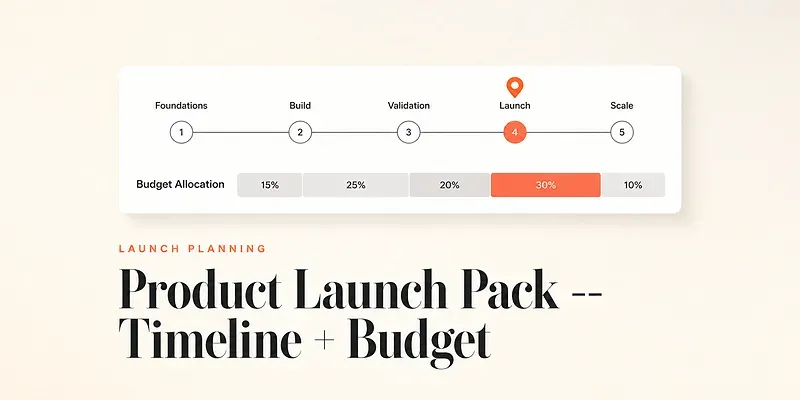
Generates a complete launch playbook in a single run: positioning, pre-launch 8-week activation plan (waitlist, teasers, PR pitches, community seeding), 7-day execution schedule with hour-by-hour day-1 timing, channel strategy with dollar budget split, full creative plan (video script, landing wireframe, email sequence, social posts, sales one-pager), post-launch 4-week roadmap, KPIs across pre/launch/30/60/90, risk register, and a one-page checklist.
...more
Added over 1 month ago
