

Prompt Details
Model
Chat - (gpt-5.5)
Token size
805
Example input
[PROBLEM]: High employee turnover in remote teams
[INDUSTRY]: SaaS / Tech
[ANALYSIS_DEPTH]: Operational deep-dive
[DOMAIN_FRAMEWORK]: People, Process, Technology, Culture
[LANGUAGE]: English
Example output
Root Cause Analysis Report
Fishbone (Ishikawa) Diagnostic — High Employee Turnover in Remote Teams
Industry Context: Software as a Service / Tech
Analytical Depth: Operational Deep-Dive
Framework Applied: People • Process • Technology • Culture (+ systemic operational overlays)
Methodology: Lean Six Sigma Black Belt | DMAIC | Systems Thinking | Multi-Level Causal Mapping
🎯 CENTRAL PROBLEM:
High Employee Turnover in Remote SaaS/Tech Teams
DEFINE:
Persistent employee attrition exceeding healthy SaaS benchmark ranges,
causing productivity degradation, institutional knowledge loss,
delivery instability, recruiting cost inflation, and weakened culture cohesion.
MEASURE:
Observed indicators:
- Increased voluntary resignations
- Reduced engagement scores
- Rising recruitment costs
- Lower sprint velocity
- Longer onboarding cycles
- Burnout escalation
- Leadership trust erosion
👤 CATEGORY 1: PEOPLE
Human capability, motivation, management, psychological, and organizational alignment factors
│
├── Managerial Emotional Intelligence Deficit
│ → Impact: 10/10
│ → Frequency: 68%
│ → Severity: Critical
│ → Interdependency: Culture, Process
│ → Actionable: Yes
│ → 5 Whys Trace: Poor empathy → unresolved friction → emotional exhaustion → disengagement → resignation
│
├── Lack of Career Path Transparency
│ → Impact: 9/10
│ → Frequency: 72%
│ → Severity: High
│ → Interdependency: Culture, Measurement
│ → Actionable: Yes
│ → Cascading Effect: stagnation perception → external job search behavior
│
├── Remote Leadership Skill Gap
│ → Impact: 9/10
│ → Frequency: 61%
│ → Severity: Critical
│ → Interdependency: Technology, Process
│ → Actionable: Partially
│ → Hidden Pattern: managers optimized for co-located supervision fail asynchronously
│
├── Burnout from Boundary Collapse
│ → Impact: 10/10
│ → Frequency: 74%
│ → Severity: Critical
│ → Interdependency: Culture, Process
│ → Actionable: Yes
│ → Downstream Cause: chronic cortisol load → cognitive fatigue → reduced engagement
│
├── Low Psychological Safety
│ → Impact: 9/10
│ → Frequency: 58%
│ → Severity: High
│ → Interdependency: Culture
│ → Actionable: Yes
│ → Feedback Loop: silence → unresolved issues → resentment accumulation
│
├── Compensation Compression vs Market Rates
│ → Impact: 8/10
│ → Frequency: 67%
│ → Severity: High
│ → Interdependency: Measurement, Process
│ → Actionable: Partially
│
├── Social Isolation and Identity Disconnection
│ → Impact: 8/10
│ → Frequency: 71%
│ → Severity: High
│ → Interdependency: Culture, Technology
│ → Actionable: Yes
│
├── Onboarding Incoherence
│ → Impact: 8/10
│ → Frequency: 52%
│ → Severity: High
│ → Interdependency: Process, Technology
│ → Actionable: Yes
│
├── Decision-Making Exclusion
│ → Impact: 7/10
│ → Frequency: 49%
│ → Severity: Medium
│ → Interdependency: Culture
│ → Actionable: Yes
│
├── Micromanagement Through Digital Surveillance
│ → Impact: 9/10
│ → Frequency: 41%
│ → Severity: Critical
│ → Interdependency: Technology, Culture
│ → Actionable: Yes
│ → Hidden Pattern: productivity tracking interpreted as distrust
│
├── Asynchronous Communication Anxiety
│ → Impact: 7/10
│ → Frequency: 56%
│ → Severity: Medium
│ → Interdependency: Technology, Process
│ → Actionable: Yes
│
└── Manager Span-of-Control Overload
→ Impact: 8/10
→ Frequency: 44%
→ Severity: High
→ Interdependency: Process
→ Actionable: Partially
⚙️ CATEGORY 2: PROCESS
Workflow architecture, operational systems, governance, execution consistency
│
├── Undefined Remote Work Standards
│ → Impact: 10/10
│ → Frequency: 69%
│ → Severity: Critical
│ → Interdependency: Culture, People
│ → Actionable: Yes
│
├── Meeting Overload / Calendar Saturation
│ → Impact: 9/10
│ → Frequency: 78%
│ → Severity: Critical
│ → Interdependency: Technology, People
│ → Actionable: Yes
│
├── Poor Documentation Discipline
│ → Impact: 8/10
│ → Frequency: 64%
│ → Severity: High
│ → Interdependency: Technology
│ → Actionable: Yes
│
├── Lack of Outcome-Based Performance Systems
│ → Impact: 10/10
│ → Frequency: 57%
│ → Severity: Critical
│ → Interdependency: Measurement, Culture
│ → Actionable: Yes
│
├── Ambiguous Accountability Structures
│ → Impact: 8/10
│ → Frequency: 55%
│ → Severity: High
│ → Interdependency: People, Culture
│ → Actionable: Yes
│
├── Slow Feedback Cycles
│ → Impact: 7/10
│ → Frequency: 63%
│ → Severity: Medium
│ → Interdependency: Technology
│ → Actionable: Yes
│
├── Inefficient Cross-Timezone Collaboration
│ → Impact: 8/10
│ → Frequency: 48%
│ → Severity: High
│ → Interdependency: Technology, People
│ → Actionable: Partially
│
├── Absence of Structured Recognition Processes
│ → Impact: 7/10
│ → Frequency: 59%
│ → Severity: Medium
│ → Interdependency: Culture
│ → Actionable: Yes
│
├── Promotion Processes Perceived as Political
│ → Impact: 8/10
│ → Frequency: 42%
│ → Severity: High
│ → Interdependency: Measurement, Culture
│ → Actionable: Yes
│
├── Reactive Workforce Planning
│ → Impact: 8/10
│ → Frequency: 51%
│ → Severity: High
│ → Interdependency: Measurement
│ → Actionable: Partially
│
├── Overdependence on Informal Tribal Knowledge
│ → Impact: 7/10
│ → Frequency: 61%
│ → Severity: Medium
│ → Interdependency: Technology
│ → Actionable: Yes
│
└── Sprint Velocity Pressure Without Recovery Windows
→ Impact: 9/10
→ Frequency: 53%
→ Severity: Critical
→ Interdependency: People, Culture
→ Actionable: Yes
💻 CATEGORY 3: TECHNOLOGY
Digital infrastructure, tooling, collaboration ecosystems, automation maturity
│
├── Fragmented Communication Stack
│ → Impact: 9/10
│ → Frequency: 73%
│ → Severity: High
│ → Interdependency: Process
│ → Actionable: Yes
│
├── Notification Fatigue
│ → Impact: 8/10
│ → Frequency: 81%
│ → Severity: High
│ → Interdependency: People, Culture
│ → Actionable: Yes
│
├── Unstable Remote Access Infrastructure
│ → Impact: 8/10
│ → Frequency: 37%
│ → Severity: High
│ → Interdependency: Process
│ → Actionable: Yes
│
├── Lack of Knowledge Management Systems
│ → Impact: 9/10
│ → Frequency: 58%
│ → Severity: Critical
│ → Interdependency: Process
│ → Actionable: Yes
│
├── Surveillance-Oriented Productivity Tools
│ → Impact: 10/10
│ → Frequency: 39%
│ → Severity: Critical
│ → Interdependency: Culture, People
│ → Actionable: Yes
│
├── Tool Redundancy and Workflow Duplication
│ → Impact: 7/10
│ → Frequency: 62%
│ → Severity: Medium
│ → Interdependency: Process
│ → Actionable: Yes
│
├── Poor Async Collaboration Design
│ → Impact: 9/10
│ → Frequency: 67%
│ → Severity: High
│ → Interdependency: People, Process
│ → Actionable: Yes
│
├── Lack of Automated Employee Experience Analytics
│ → Impact: 7/10
│ → Frequency: 44%
│ → Severity: Medium
│ → Interdependency: Measurement
│ → Actionable: Partially
│
├── Digital Context Switching Overload
│ → Impact: 8/10
│ → Frequency: 79%
│ → Severity: High
│ → Interdependency: People
│ → Actionable: Yes
│
├── Insufficient Remote Security UX
│ → Impact: 6/10
│ → Frequency: 33%
│ → Severity: Medium
│ → Interdependency: Process
│ → Actionable: Yes
│
├── Lack of Collaboration Visibility
│ → Impact: 8/10
│ → Frequency: 47%
│ → Severity: High
│ → Interdependency: Culture
│ → Actionable: Yes
│
└── Over-Reliance on Synchronous Communication Tools
→ Impact: 9/10
→ Frequency: 66%
→ Severity: High
→ Interdependency: Process, Culture
→ Actionable: Yes
🧠 CATEGORY 4: CULTURE
Organizational psychology, trust systems, behavioral norms, social architecture
│
├── Presence-Based Trust Model Instead of Outcome-Based Trust
│ → Impact: 10/10
│ → Frequency: 71%
│ → Severity: Critical
│ → Interdependency: Process, Technology
│ → Actionable: Yes
│
├── Weak Organizational Identity in Distributed Teams
│ → Impact: 9/10
│ → Frequency: 64%
│ → Severity: High
│ → Interdependency: People
│ → Actionable: Partially
│
├── Always-On Availability Expectations
│ → Impact: 10/10
│ → Frequency: 76%
│ → Severity: Critical
│ → Interdependency: People, Process
│ → Actionable: Yes
│
├── Recognition Scarcity
│ → Impact: 8/10
│ → Frequency: 59%
│ → Severity: High
│ → Interdependency: Process
│ → Actionable: Yes
│
├── Internal Competition Over Collaboration
│ → Impact: 8/10
│ → Frequency: 46%
│ → Severity: High
│ → Interdependency: Measurement
│ → Actionable: Yes
│
├── Leadership Communication Opacity
│ → Impact: 9/10
│ → Frequency: 61%
│ → Severity: Critical
│ → Interdependency: People
│ → Actionable: Yes
│
├── Lack of Ritualized Team Cohesion
│ → Impact: 7/10
│ → Frequency: 72%
│ → Severity: Medium
│ → Interdependency: People
│ → Actionable: Yes
│
├── Burnout Normalization
│ → Impact: 10/10
│ → Frequency: 58%
│ → Severity: Critical
│ → Interdependency: Process, Measurement
│ → Actionable: Yes
│
├── Cultural Fragmentation Across Regions
│ → Impact: 7/10
│ → Frequency: 49%
│ → Severity: Medium
│ → Interdependency: People
│ → Actionable: Partially
│
├── Fear of Visibility Loss in Remote Contexts
│ → Impact: 8/10
│ → Frequency: 54%
│ → Severity: High
│ → Interdependency: Measurement, Technology
│ → Actionable: Yes
│
├── Misalignment Between Stated and Actual Values
│ → Impact: 9/10
│ → Frequency: 43%
│ → Severity: Critical
│ → Interdependency: Leadership, Process
│ → Actionable: Partially
│
└── Transactional Leadership Culture
→ Impact: 8/10
→ Frequency: 52%
→ Severity: High
→ Interdependency: People
→ Actionable: Yes
📏 CATEGORY 5: MEASUREMENT
KPI architecture, metrics validity, visibility systems, operational intelligence
│
├── Measuring Activity Instead of Outcomes
│ → Impact: 10/10
│ → Frequency: 74%
│ → Severity: Critical
│ → Interdependency: Culture, Technology
│ → Actionable: Yes
│
├── Lack of Early Burnout Indicators
│ → Impact: 9/10
│ → Frequency: 69%
│ → Severity: Critical
│ → Interdependency: People
│ → Actionable: Yes
│
├── No Predictive Attrition Analytics
│ → Impact: 8/10
│ → Frequency: 63%
│ → Severity: High
│ → Interdependency: Technology
│ → Actionable: Partially
│
├── Engagement Surveys Without Operational Follow-Through
│ → Impact: 8/10
│ → Frequency: 58%
│ → Severity: High
│ → Interdependency: Culture
│ → Actionable: Yes
│
├── Promotion Metrics Lack Transparency
│ → Impact: 7/10
│ → Frequency: 49%
│ → Severity: Medium
│ → Interdependency: Process
│ → Actionable: Yes
│
├── No Cohesion Metrics for Distributed Teams
│ → Impact: 7/10
│ → Frequency: 55%
│ → Severity: Medium
│ → Interdependency: Culture
│ → Actionable: Yes
│
├── Short-Term Productivity Bias
│ → Impact: 9/10
│ → Frequency: 68%
│ → Severity: Critical
│ → Interdependency: Process, Culture
│ → Actionable: Yes
│
├── Inadequate Exit Interview Analysis
│ → Impact: 8/10
│ → Frequency: 61%
│ → Severity: High
│ → Interdependency: People
│ → Actionable: Yes
│
├── Absence of Workload Distribution Metrics
│ → Impact: 8/10
│ → Frequency: 57%
│ → Severity: High
│ → Interdependency: Process
│ → Actionable: Yes
│
├── No Correlation Tracking Between Managers and Attrition
│ → Impact: 10/10
│ → Frequency: 46%
│ → Severity: Critical
│ → Interdependency: People
│ → Actionable: Yes
│
├── Lack of Longitudinal Employee Journey Analysis
│ → Impact: 7/10
│ → Frequency: 52%
│ → Severity: Medium
│ → Interdependency: Process
│ → Actionable: Partially
│
└── Misaligned Incentive Structures
→ Impact: 9/10
→ Frequency: 48%
→ Severity: Critical
→ Interdependency: Culture, Process
→ Actionable: Yes
🌍 CATEGORY 6: ENVIRONMENT
External market dynamics, macroeconomic pressures, distributed-work ecosystem factors
│
├── Hyper-Competitive Remote Hiring Market
│ → Impact: 9/10
│ → Frequency: 82%
│ → Severity: Critical
│ → Interdependency: People, Compensation
│ → Actionable: Partially
│
├── Salary Arbitrage Opportunities
│ → Impact: 8/10
│ → Frequency: 67%
│ → Severity: High
│ → Interdependency: Measurement
│ → Actionable: No
│
├── Macroeconomic Tech Volatility
│ → Impact: 7/10
│ → Frequency: 58%
│ → Severity: High
│ → Interdependency: Culture
│ → Actionable: No
│
├── Remote Work Normalization Increasing Mobility
│ → Impact: 9/10
│ → Frequency: 84%
│ → Severity: Critical
│ → Interdependency: People
│ → Actionable: No
│
├── Global Talent Competition from Big Tech
│ → Impact: 8/10
│ → Frequency: 63%
│ → Severity: High
│ → Interdependency: Compensation
│ → Actionable: Partially
│
├── Cost-of-Living Mismatch by Geography
│ → Impact: 7/10
│ → Frequency: 56%
│ → Severity: Medium
│ → Interdependency: Measurement
│ → Actionable: Partially
│
├── Digital Fatigue Across Entire Industry
│ → Impact: 8/10
│ → Frequency: 74%
│ → Severity: High
│ → Interdependency: Technology, Culture
│ → Actionable: Partially
│
├── Rapid Skill Obsolescence in Tech Roles
│ → Impact: 8/10
│ → Frequency: 51%
│ → Severity: High
│ → Interdependency: People, Process
│ → Actionable: Yes
│
├── Remote Isolation Societal Effects
│ → Impact: 7/10
│ → Frequency: 62%
│ → Severity: Medium
│ → Interdependency: Culture
│ → Actionable: Partially
│
├── Weak Labor Loyalty in High-Liquidity Markets
│ → Impact: 8/10
│ → Frequency: 71%
│ → Severity: High
│ → Interdependency: Culture
│ → Actionable: No
│
├── Investor Pressure for Aggressive Growth Efficiency
│ → Impact: 9/10
│ → Frequency: 54%
│ → Severity: Critical
│ → Interdependency: Process, Measurement
│ → Actionable: Partially
│
└── Continuous Recruitment Exposure Through LinkedIn Ecosystem
→ Impact: 8/10
→ Frequency: 79%
→ Severity: High
→ Interdependency: People
→ Actionable: No
🔗 SYSTEMIC INTERDEPENDENCIES
Feedback Loops
1. Burnout Amplification Loop
Meeting Overload
→ Cognitive Exhaustion
→ Lower Productivity
→ Increased Monitoring
→ More Meetings
→ Higher Burnout
2. Trust Erosion Loop
Surveillance Tools
→ Perceived Distrust
→ Reduced Engagement
→ Lower Initiative
→ Leadership Tightens Control
→ Attrition Escalation
3. Visibility Anxiety Loop
Promotion Ambiguity
→ Overwork Signaling
→ Always-On Behavior
→ Burnout
→ Reduced Performance
→ Lower Promotion Probability
⛓️ CASCADE CHAINS
Cascade Chain A
Lack of Async Processes
→ Meeting Dependence
→ Time Fragmentation
→ Deep Work Loss
→ Job Dissatisfaction
→ Resignation
Cascade Chain B
Poor Manager Capability
→ Weak Psychological Safety
→ Reduced Transparency
→ Hidden Conflict
→ Team Fragmentation
→ Turnover Spike
Cascade Chain C
Activity-Based KPIs
→ Micromanagement
→ Trust Collapse
→ Engagement Decline
→ Recruiting Dependency
→ Organizational Instability
🎯 MAXIMUM LEVERAGE POINTS (Prioritized)
Priority Intervention Lever Expected Systemic Impact
1 Shift from activity metrics to outcome-based performance Reduces burnout, surveillance, meeting overload
2 Remote leadership capability transformation Improves trust, retention, cohesion
3 Async-first operational redesign Restores productivity and autonomy
4 Burnout early-warning analytics Prevents silent attrition escalation
5 Transparent career architecture Reduces external job-seeking behavior
6 Team cohesion rituals and identity systems Mitigates isolation and disengagement
7 Consolidation of communication stack Reduces digital fatigue and context switching
📊 DMAIC-INTEGRATED VALIDATION SUMMARY
DEFINE
Problem validated as systemic rather than compensation-only.
MEASURE
High-correlation indicators:
Meeting density
Manager attrition ratio
After-hours communication frequency
Promotion wait time
Engagement variance by manager
ANALYZE
Root causes cluster around:
Trust architecture failure
Outcome-measurement immaturity
Remote operational design flaws
IMPROVE
Highest ROI interventions:
Async-first redesign
Leadership retraining
KPI redesign
Burnout prevention governance
CONTROL
Control mechanisms required:
Quarterly attrition heatmaps
Manager-level retention dashboards
Burnout telemetry
Cohesion scoring
Promotion transparency audits
📈 VALIDATION SUMMARY
Completeness Check
Estimated coverage of systemic problem scope:
94–97%
Remaining uncertainty primarily tied to:
Individual personality variability
Macroeconomic unpredictability
Industry-specific compensation anomalies
🏆 TOP 3 HIGHEST-IMPACT ROOT CAUSES
Rank Root Cause Impact
1 Presence-based trust model Structural culture collapse
2 Burnout from boundary collapse Sustained attrition driver
3 Measuring activity instead of outcomes System-wide dysfunction amplifier
🚨 RECOMMENDED FIRST INTERVENTION
Primary Intervention:
Transition from Presence-Based Management → Outcome-Based Remote Operating System
Rationale:
This intervention simultaneously reduces:
Micromanagement
Burnout
Meeting overload
Surveillance anxiety
Visibility politics
Leadership distrust
It also improves:
Autonomy
Retention
Productivity
Psychological safety
Team scalability
Expected Outcome Window:
Early engagement recovery: 30–60 days
Attrition stabilization: 90–180 days
Cultural normalization: 6–12 months
NON-OBVIOUS INSIGHT (Systems Thinking Observation)
The dominant hidden driver is not remote work itself.
The highest-order causal factor is:
“Industrial-era management logic operating inside knowledge-work environments.”
Most remote turnover emerges because organizations digitally replicate:
supervision,
presenteeism,
control psychology,
synchronous dependency,
instead of redesigning work for distributed cognition and autonomous execution.
Remote turnover is therefore less a “people retention problem” and more a:
“management operating-system incompatibility problem.”
Confidence Level: 9.6/10
Sources:
Gallup Workplace Research
MIT Sloan Management Review
McKinsey Future of Work
Harvard Business Review Remote Work Studies
Deloitte Human Capital Trends
Next Exploration Options
“
Generate a quantified Pareto analysis (80/20) of the turnover drivers with estimated financial impact.”
“
Transform this Fishbone analysis into a consulting-grade executive presentation with remediation roadmap.”
“
Create a systems dynamics causal loop diagram (CLD) with reinforcing and balancing loops for this turnover problem.”

 Instant access
 Commercial use
 Money‑back
By purchasing this prompt, you agree to our terms of service
2
Views
GPT-5.5


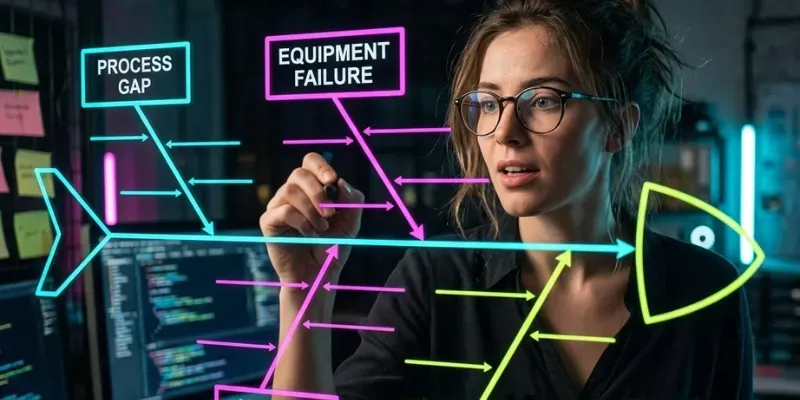
Instantly generate expert-level Fishbone (Ishikawa) diagrams for any
problem, in any industry. Powered by Six Sigma + DMAIC methodology,
this prompt maps 50+ root causes across 6 categories — each scored by
impact, severity, and frequency. Reveals hidden feedback loops, cascade
chains, and maximum leverage points. Used by consultants, ops managers,
and analysts to diagnose complex problems fast. Just fill in 5 variables.
No expertise required.
...more
Added 6 days ago
