

Prompt Details
Model
(claude-4-6-sonnet)
Token size
1,012
Example input
[SKILL_CONCEPT]: writing and structuring case study documents from raw client interview notes and outcome data
[USER_TYPE]: freelance B2B copywriter
[DOMAIN]: content marketing
Example output
END-OF-BUILD REPORT
Quality Gate Score: 63/70
DimensionScoreNotesFrontmatter completeness10/10Name, description, activation signal all presentPurpose clarity9/10Failure mode named precisely; no fillerWhen to Use coverage9/108 scenarios + 5-item SCOPE blockProcess depth18/2012 steps, each with bold title + output sentence; Step 1 could be sharper on ambiguity handlingValidation rigor10/107 checkboxes, each objectively testableToken discipline7/10Under budget; slightly conservative on Process detail
Persona Selected: Editorial
Rationale: B2B case study writing is a judgment-driven craft task where narrative structure and voice precision matter more than analytical scoring or engineering logic — the Editorial voice enforces clarity, attribution discipline, and buyer-committee framing throughout.
Reasoning Tier: CCoT (Constructive Chain-of-Thought)
Rationale: The task is a multi-step workflow with a defined deliverable structure (four-zone narrative arc, annotated draft output) and interdependent steps — each zone builds on prior material — making CCoT the correct tier over linear SCoT.
Token Count SKILL.md: ~720 tokens (well under the 1,200 ceiling; leaves headroom for runtime injection of source material context)
Progressive Disclosure Level: L0
All rules, scope constraints, process steps, and validation logic are contained in this single file. No bundled references or sub-agents required.
Output Mode: Document generation with inline editorial annotation
Allowed tools: (none required — skill operates on context-provided source material without filesystem or browser calls)
Example 1 (activation trigger):
"Here are my interview notes from the Acme Corp call and their before/after metrics. Can you draft the case study?"
Example 2 (activation trigger):
"I have a client questionnaire response and some stats — help me structure this into a proper case study document."
Setup instructions:
Save the file to /mnt/skills/public/b2b-case-study-writer/SKILL.md. No MCP servers, environment variables, or external tools required. The skill is self-contained and activates on context-provided source material alone.
Skill name on disk: b2b-case-study-writer
SKILL.md
---
name: b2b-case-study-writer
description: Transforms raw B2B client interview notes and outcome data into structured, publication-ready case study documents. Activate when a freelance copywriter needs to draft, structure, or refine a case study from unpolished source material including transcripts, quotes, metrics, or intake forms.
---
# B2B Case Study Writer
## Purpose
Without a reliable structure, freelance copywriters routinely stall between raw interview notes and a publishable document — producing drafts that bury the proof point, bury the client voice, or fail to frame business impact in terms a buying committee trusts. This skill imposes editorial discipline from the first pass: it extracts signal from messy input, sequences the narrative around verifiable outcomes, and produces a case study that functions as a sales asset, not a testimonial blog post.
---
## When to Use
1. You have a completed client interview transcript and need to produce a first draft.
2. You received a questionnaire response from the client and must shape it into a publishable document.
3. You have outcome data (metrics, percentages, time-to-value figures) but no narrative scaffolding.
4. A client has provided bullet-point notes instead of a polished story.
5. You need to reformat an existing case study that lacks a clear challenge–solution–result arc.
6. You are writing a case study optimized for a specific buyer persona or vertical.
7. You must extract and attribute direct quotes without distorting the client's voice.
8. You are producing multiple case studies from similar interview templates and need consistent structure.
### SCOPE — This skill does NOT handle:
- Cold outreach copy or sales email sequences referencing the case study
- SEO keyword research or on-page metadata optimization
- Video scripts or podcast episode adaptations
- Legal review of claims, NDAs, or approval workflows
- Translating finished case studies into other languages
---
## Process
1. **Ingest source material.** Read all provided inputs (transcripts, notes, data exports, intake forms) without summarizing; flag any fields that are missing or ambiguous.
2. **Identify the proof point.** Extract the single strongest quantified outcome — the number, percentage, or time-saving claim that anchors the entire document.
3. **Map the narrative arc.** Assign every usable quote or data point to one of four zones: Client Context, Challenge, Solution, Result.
4. **Draft the headline and subheadline.** Write a results-led headline (outcome first, context second) and a one-sentence subheadline that names the client type and the core problem solved.
5. **Write the Client Snapshot section.** Produce a 40–60 word company profile covering industry, size, and the strategic pressure that made the problem urgent.
6. **Write the Challenge section.** Articulate the before-state in the client's own vocabulary, drawing directly from interview language; avoid vendor framing.
7. **Write the Solution section.** Describe what was implemented and why it fit, foregrounding the decision logic rather than a feature list.
8. **Write the Results section.** Lead with the proof point, follow with secondary metrics, then close with a direct client quote that validates the emotional outcome.
9. **Insert pull quote.** Select the most attribution-worthy quote, verify it appears verbatim from source material, and format it as a standalone pull quote element.
10. **Write the closing CTA paragraph.** Draft a one- to two-sentence next-step prompt aligned to the intended distribution channel (sales deck, website, email nurture).
11. **Run structural QA.** Confirm all four narrative zones are present, no unattributed claims exist, and the proof point appears in both the headline and Results section.
12. **Deliver annotated draft.** Output the case study with inline editorial notes flagging any gaps requiring client confirmation before publication.
---
## Validation
- [ ] The headline leads with a quantified outcome, not the vendor's product name
- [ ] Every metric in the Results section maps directly to a source line in the input material — no inferred or rounded figures
- [ ] At least one direct client quote is present and attributed by name and title (or flagged as pending approval)
- [ ] The Challenge section uses the client's language, not the copywriter's or vendor's
- [ ] The four-zone arc (Context → Challenge → Solution → Result) is complete with no zone left implicit
- [ ] The closing CTA matches the stated distribution channel
- [ ] No claims remain unverified from source; ambiguous figures are bracketed with `[CONFIRM]` tags



Get this prompt + 9 more with SelectFrom $14/mo · Cancel anytimeFrom $14/mo · Cancel anytime
View Select
 Instant access
 Commercial use
 Money‑back
By purchasing this prompt, you agree to our terms of service
5.0
1 review
3
Favorites
114
Views
CLAUDE-4-6-SONNET


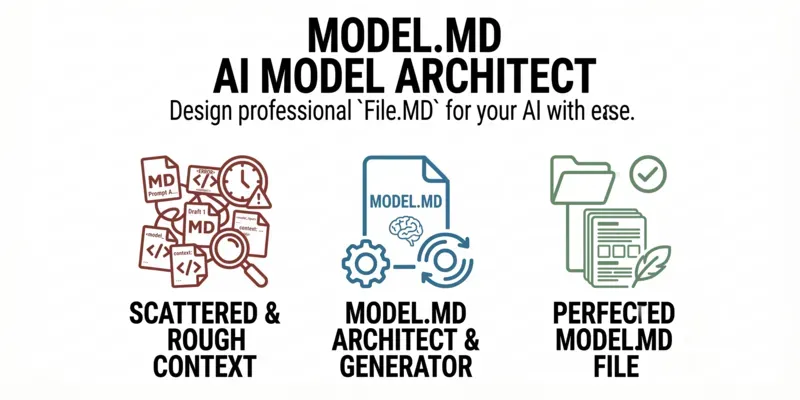
This prompt architects a single production-ready SKILL.md with correct frontmatter, a runtime-matched description, scoped process steps, and a self-scoring build report — deployed in one shot.
🔹 Token-aware SKILL.md under 1,200 tokens
✅ Runtime activation logic built into frontmatter
🔹 Self-scoring quality gate in every build
✅ Works for any domain, role, or workflow
🔹 Deploy-ready output with setup instructions
...more
Added over 1 month ago

- Reviews for this prompt (1)